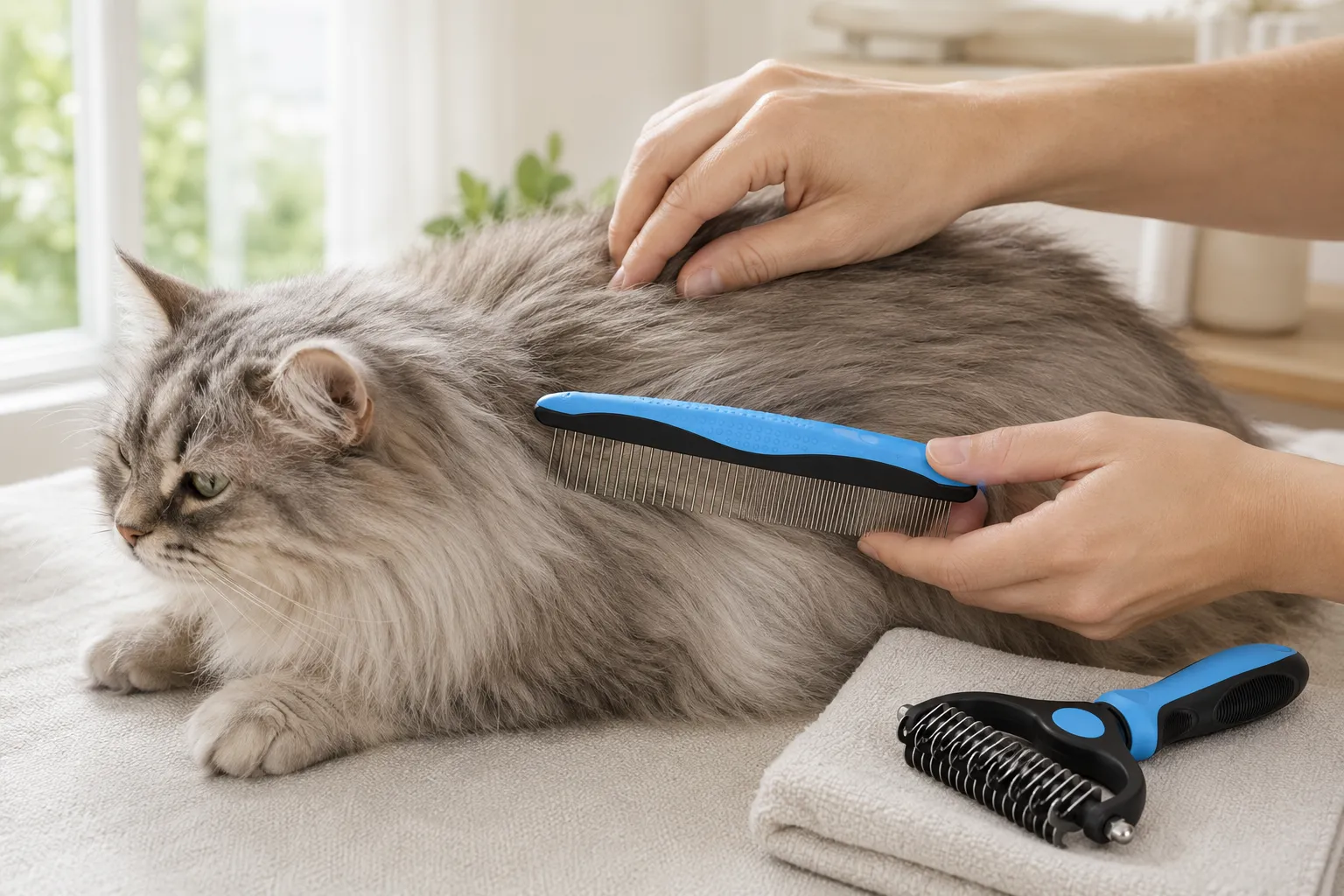
Grooming a long-haired cat should follow the cat’s coat condition and behavior. Start with your hands and a metal comb. Use an undercoat rake only when loose undercoat is present, the coat is dense enough, and the cat remains comfortable.
Quick Answer: Begin when your cat is relaxed. Inspect the coat and skin with your hands, then use the wider-spaced section of a metal comb in the direction of hair growth. Stop at resistance. Use the 9-tooth side only for a small, manageable tangle, and use the 17-tooth side only for loose undercoat on a suitable, tangle-free body section. Work with very light pressure and short, controlled passes. End the session if the tool repeatedly catches, the skin becomes red, or the cat shows discomfort.
Long-haired cats may benefit from frequent combing, but that does not mean daily rake use.
Prepare the Cat and Inspect the Coat
Choose a quiet, familiar place and allow the cat to leave. Do not pin the cat down or try to finish the entire coat at once.
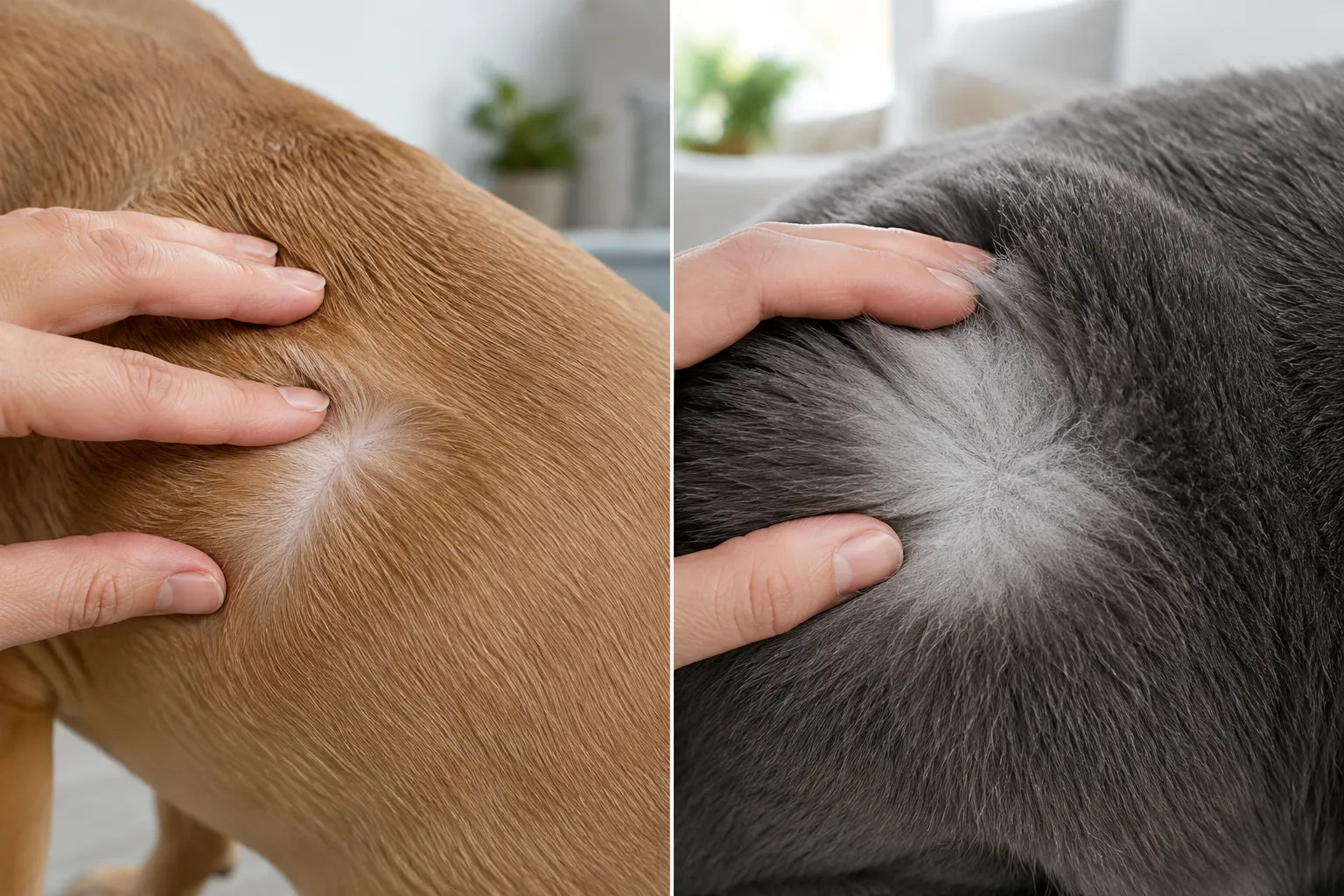
Let the cat inspect the tools, then check the coat with your hands.
Look and feel for:
- loose soft hair beneath the outer coat;
- small tangles;
- dense or flat mats;
- redness, wounds, sores, or scabs;
- dampness, odor, or discharge;
- bald or thinning areas;
- unusual sensitivity.
Areas that need inspection are not automatically suitable for a rake. Avoid the face, ears, paws, armpits, belly, groin, genital area, and other thinly coated or sensitive areas.
Contact a veterinarian for painful, red, broken, wet, bleeding, or otherwise abnormal skin. Sudden decline in self-grooming also deserves attention.
Start With the Metal Comb
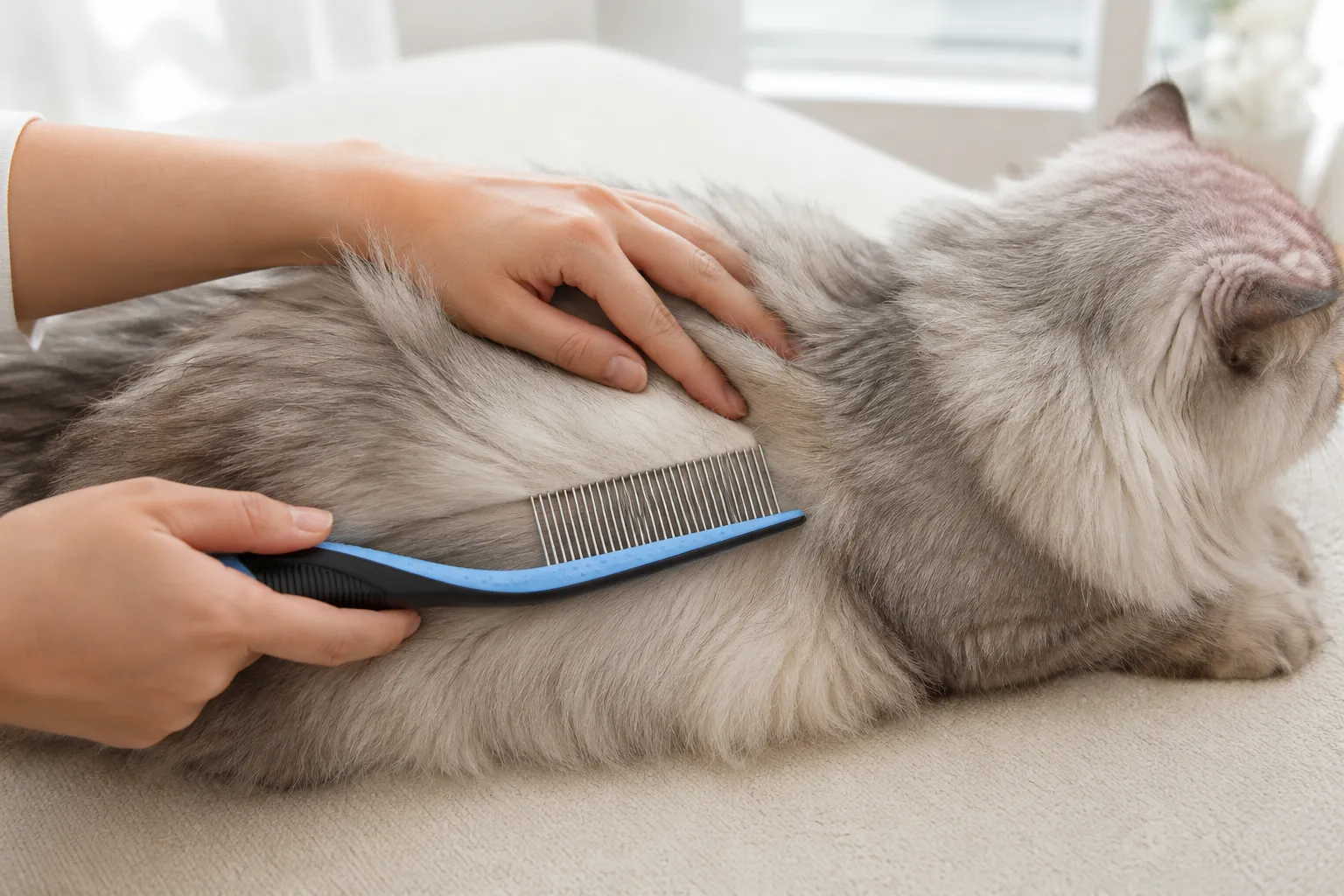
The metal comb is the main checking tool. Begin with its wider-spaced teeth.
Choose a small tolerated section, start near the hair ends, move with coat growth, and stop when the comb catches.
The comb can tell you what the coat needs:
- Smooth passage with loose soft hair: the section may contain loose undercoat.
- One localized catch: there may be a manageable tangle.
- Broad or repeated resistance: the coat may be packed or matted.
- A painful reaction: stop the session.
Part long hair with your fingers because a smooth surface can hide resistance underneath.
Use the finer teeth only after the wider section passes freely.
Separate a Manageable Tangle From a Dense Mat
A manageable tangle is small and loose enough that its outer edge separates gently while the skin remains visible.
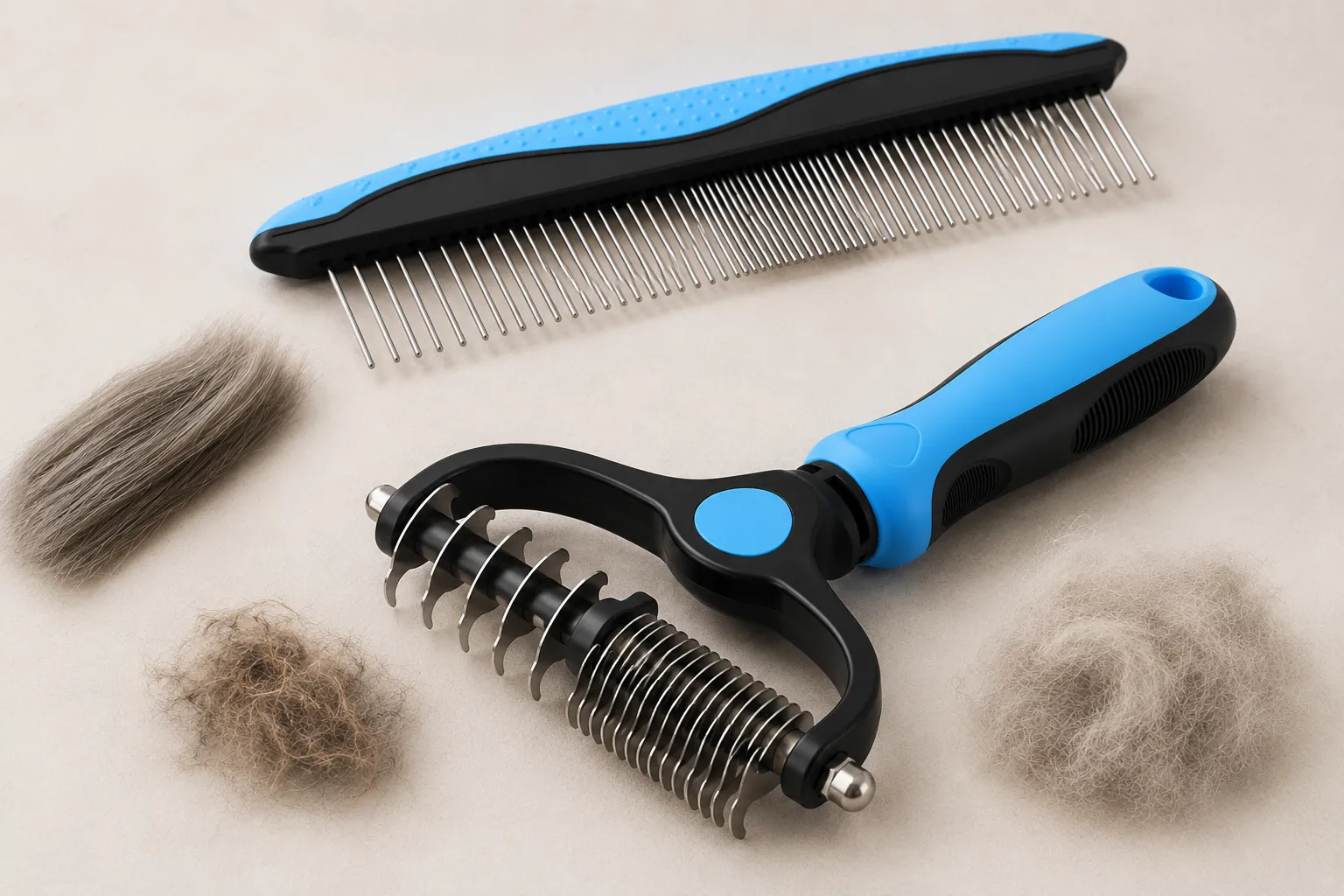
According to the seller’s product description, the wider side of the Docrok rake is intended for mats and tangles. Project photographs confirm that this is the 9-tooth side.
Limit it to a clearly manageable tangle on a broad, well-coated section. Do not use it over the whole body, and do not use it on a dense mat close to the skin.
A mat needs professional help when it is flat, hard, painful, widespread, or repeatedly traps the comb. Do not cut it with scissors or bathe it before assessment.
Decide Whether the Rake Suits This Cat
An undercoat rake is optional. It may suit a cat with substantial loose undercoat and enough coat depth to cushion the teeth.
Skip the rake when:
- the coat is fine, silky, or sparse;
- little loose undercoat is present;
- the teeth reach the skin too directly;
- the tool repeatedly snags;
- mats remain in the section;
- the cat dislikes the tool;
- only sensitive areas need attention.
The dense 17-tooth side is intended for loose-undercoat removal. Use it only after the metal comb confirms that the section is free of tangles.
Work on a broad, well-coated body section. Keep the rake relatively flat, follow coat direction, and avoid pressing into the skin.
After one controlled pass, clear the tool and check the coat, skin, and cat. There is no universal pass count, pressure, session length, or rake schedule.
Keep Feline Sessions Short and Watch Behavior
Cats often show subtle discomfort before defensive behavior. Watch for:
- tail twitching or swishing;
- ears moving back;
- rapid changes in ear position;
- dilated pupils;
- body tension;
- turning toward the tool;
- trying to move away;
- growling or hissing.
End the session at the first consistent signs of discomfort. A quiet cat is not automatically comfortable, so watch the ears, tail, eyes, and body tension.
Divide the coat across separate sessions when needed.
Finish, Recheck, and Know When to Refer
After raking, recheck with the wider comb teeth. Use the finer teeth only after the wider side moves freely.
A section may be finished when:
- the comb passes freely;
- loose-hair collection has slowed;
- the coat lies evenly;
- the skin looks normal;
- the cat remains comfortable.
Do not keep grooming until no hair appears. Frequent combing and rake use are separate decisions.
Contact a groomer for large, widespread, or skin-level matting. Contact a veterinarian for pain, abnormal skin, sudden coat decline, reduced self-grooming, or possible sedation needs.
You can view the Docrok grooming brush and metal comb combo to see how the two rake surfaces and comb are arranged.
Final Takeaway
A good long-haired cat grooming routine is comb-led and cat-led:
- Begin with a relaxed cat.
- Inspect the coat and skin.
- Use the wider metal-comb teeth first.
- Treat only a manageable tangle.
- Use the 17-tooth side only when loose undercoat is present.
- Stop at resistance or early signs of discomfort.
- Recheck with the comb.
As an Amazon Associate I earn from qualifying purchases.
Sources
- VCA Animal Hospitals — Grooming and Coat Care for Your Cat
- VCA Animal Hospitals — How to Groom a Long-Haired Cat
- Blue Cross — How to Groom Your Cat
- RSPCA — How and Why to Groom Your Cat
- Cat Friendly Homes — Grooming Tools and Essentials for Your Cat
- PetMD — Pet Grooming: How to Handle Matting in Dogs and Cats
- Cornell Feline Health Center — The Special Needs of the Senior Cat
- Amazon — Docrok Pet Grooming Combo