 Getting Started
How to Use an Undercoat Rake on a Dog or Cat
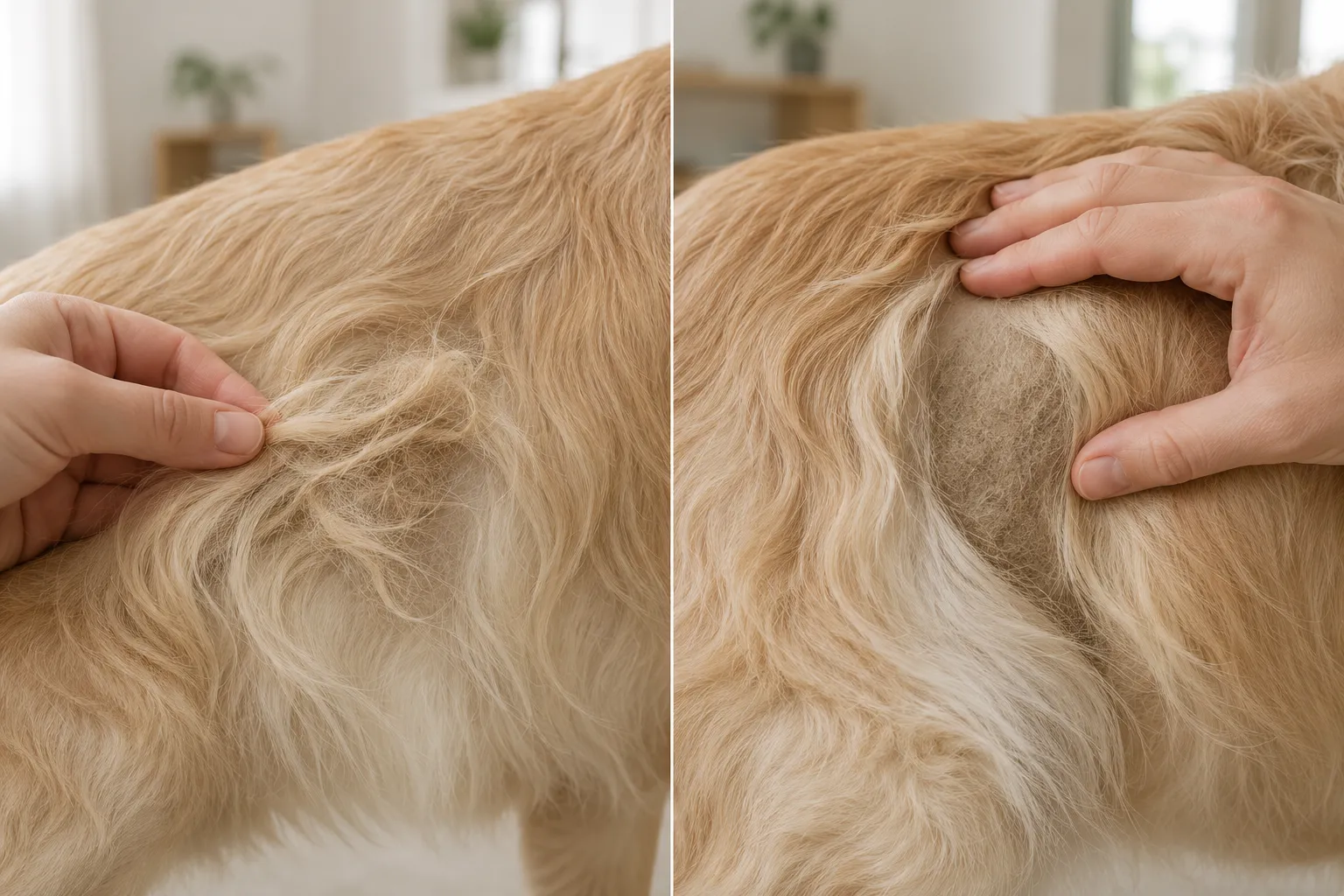
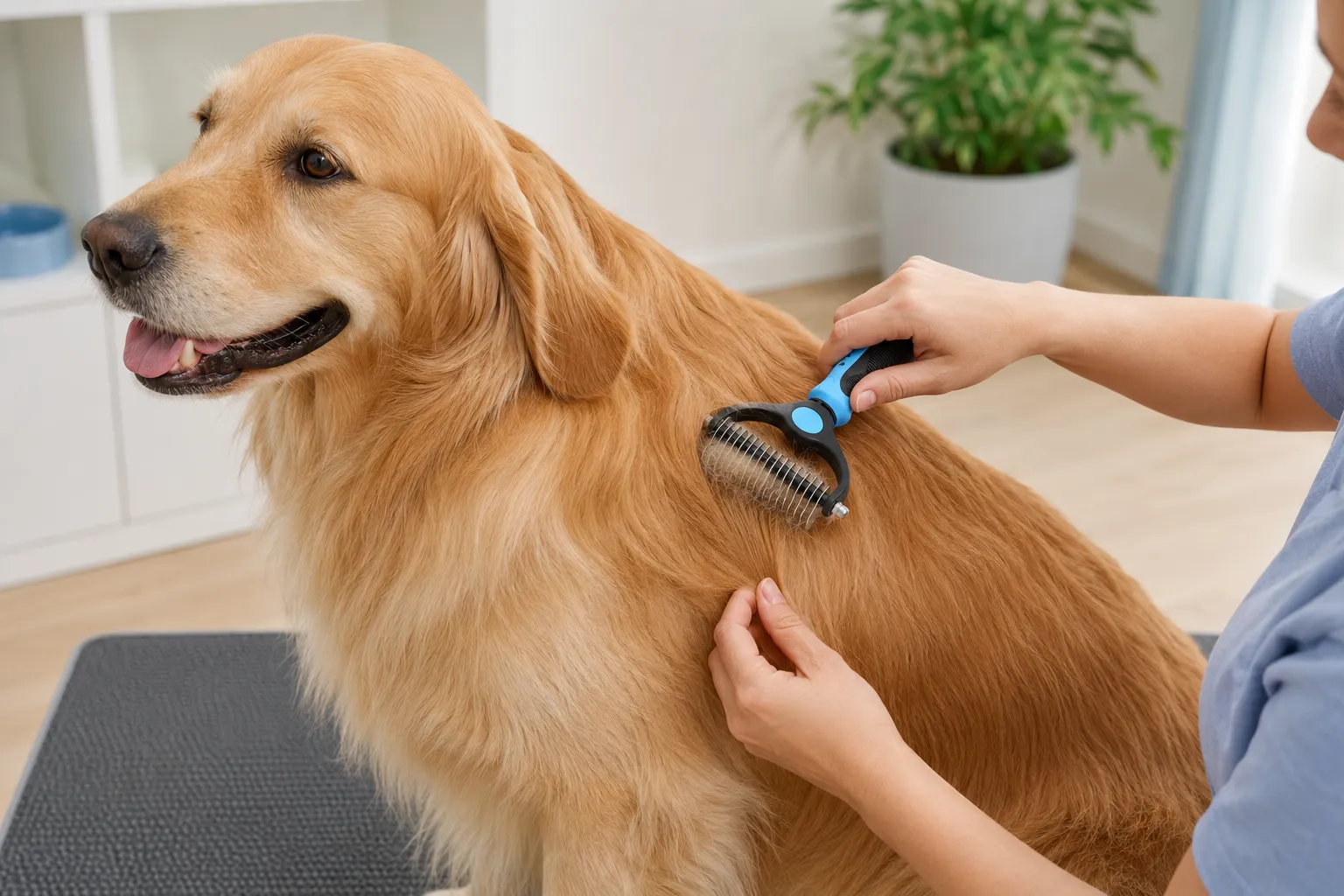
Use an undercoat rake only after confirming that it fits the coat. Choose the side that matches the problem, work in small sections, and stop at resistance.
Read the GuideAt-Home Grooming Guide
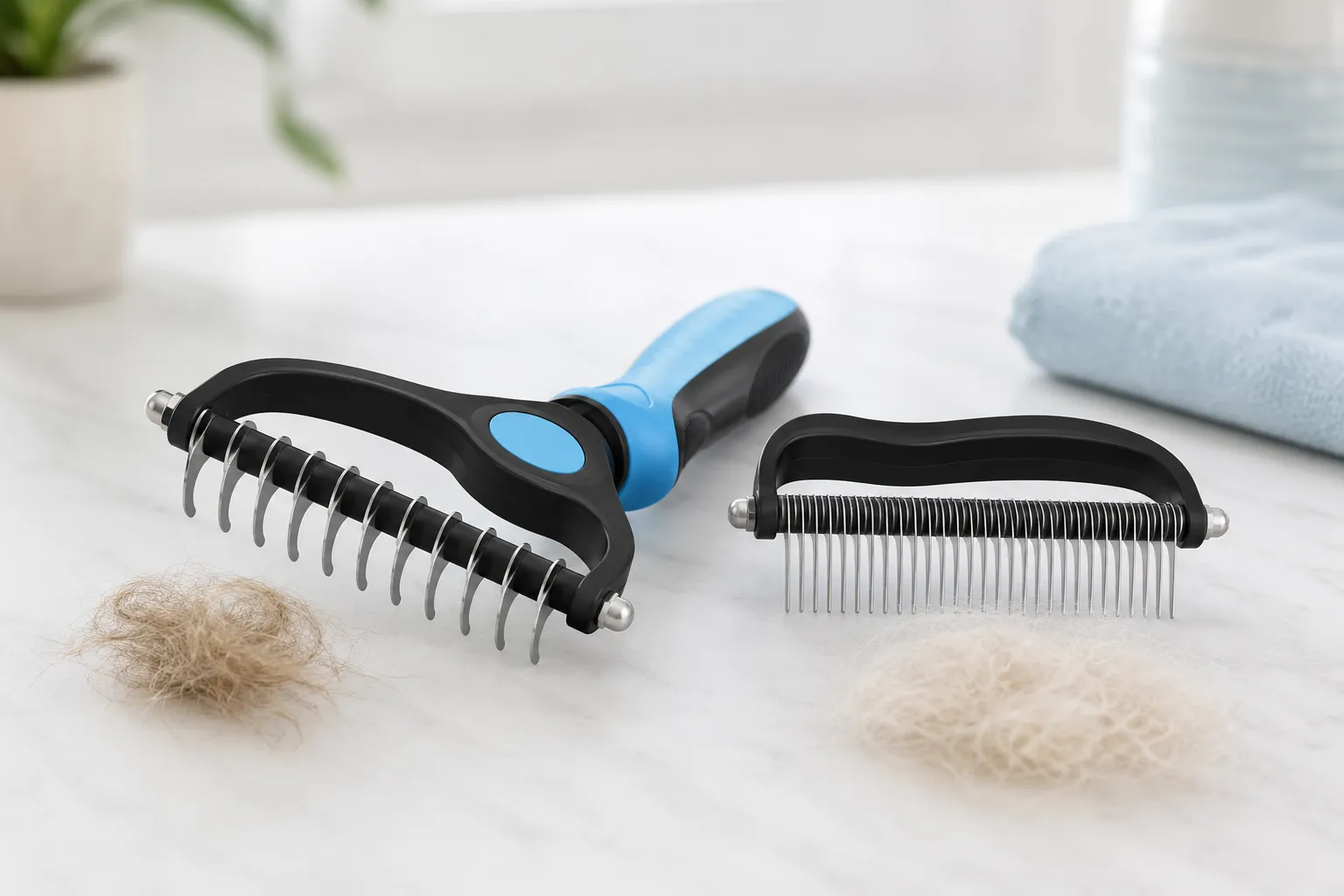
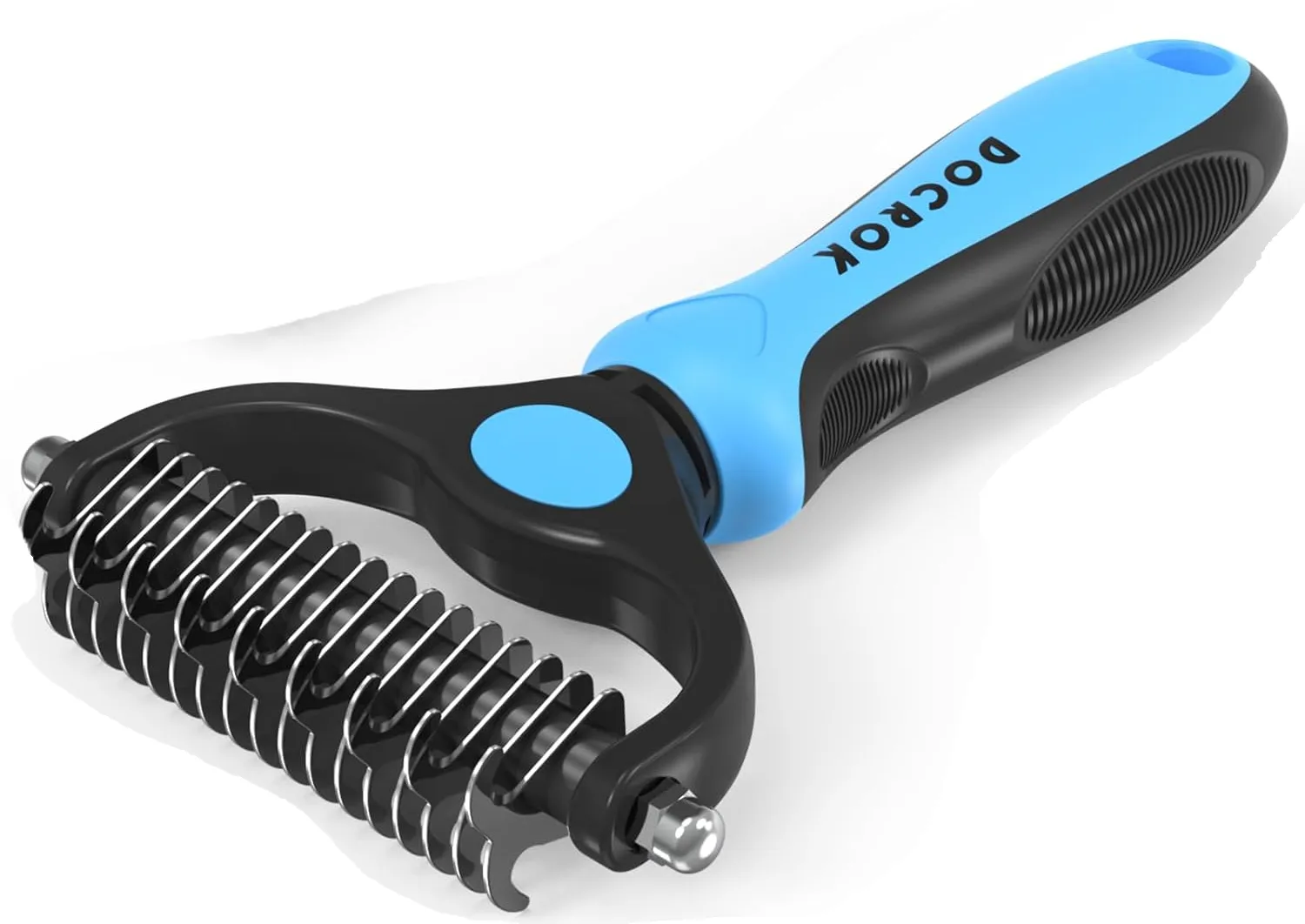
The Docrok grooming combo includes one dual-sided undercoat rake and one two-sided metal grooming comb for suitable dogs and cats. This independent guide explains what is included, where each grooming function may fit, and when to stop.
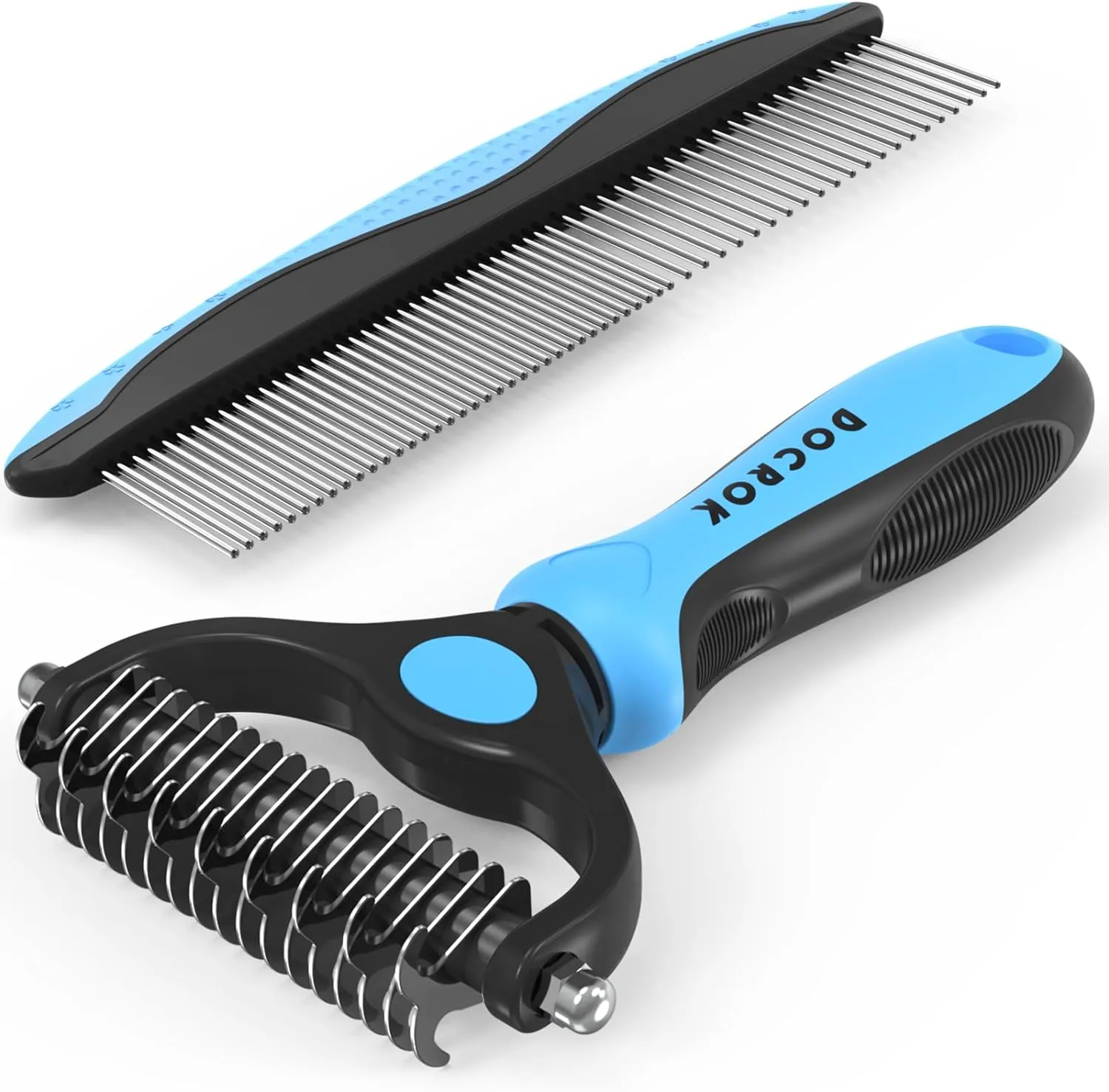
The video is presented as a product-use reference only. Coat condition, skin sensitivity, body area, and the pet's response should guide whether to continue.
What the set is for
What Is Included
See the complete product guide for confirmed product details and limits.
Affiliate link
Tool Functions
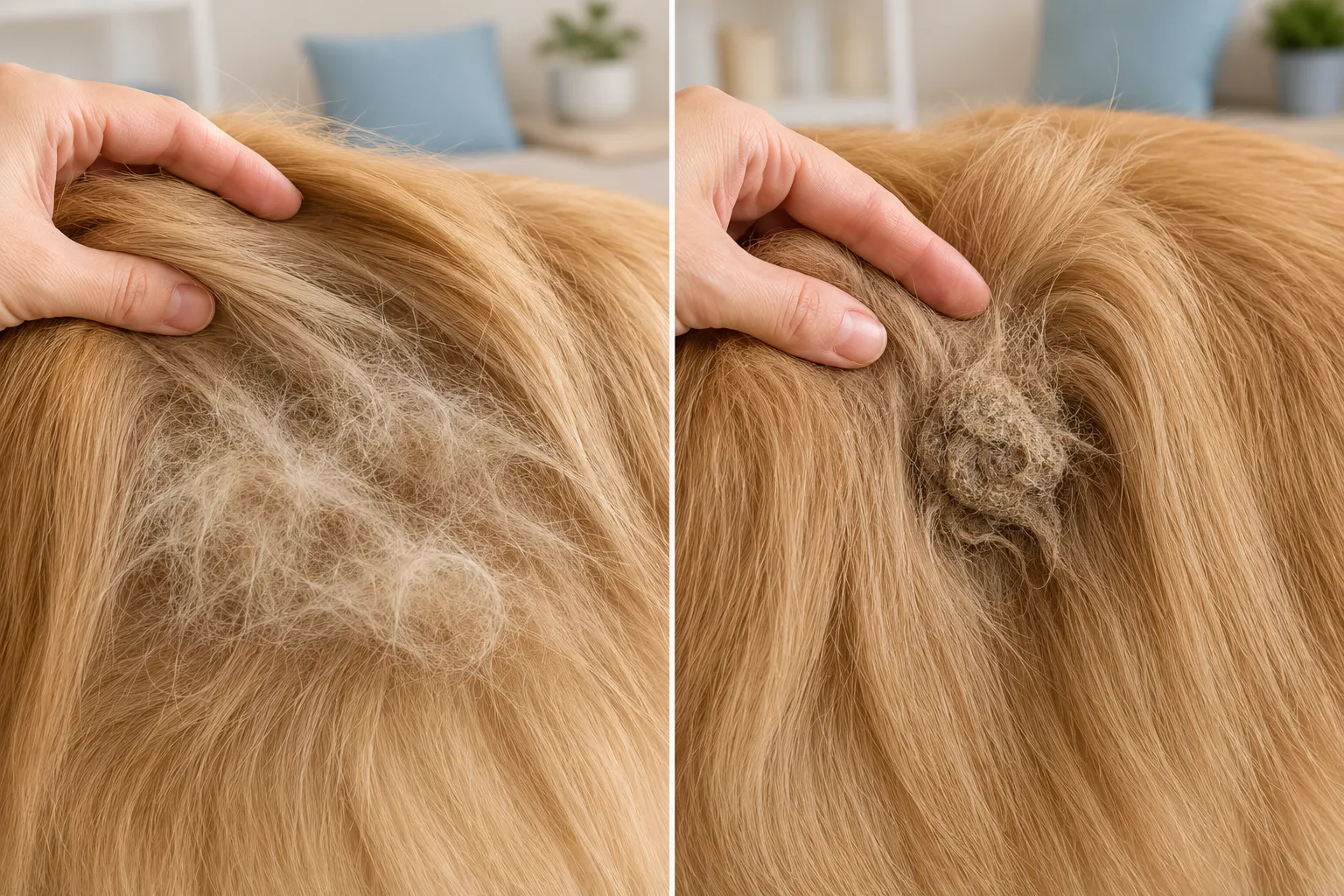
For manageable light tangles on suitable coat sections. This side can be skipped when no manageable tangle is present, and you should stop at resistance instead of pulling.
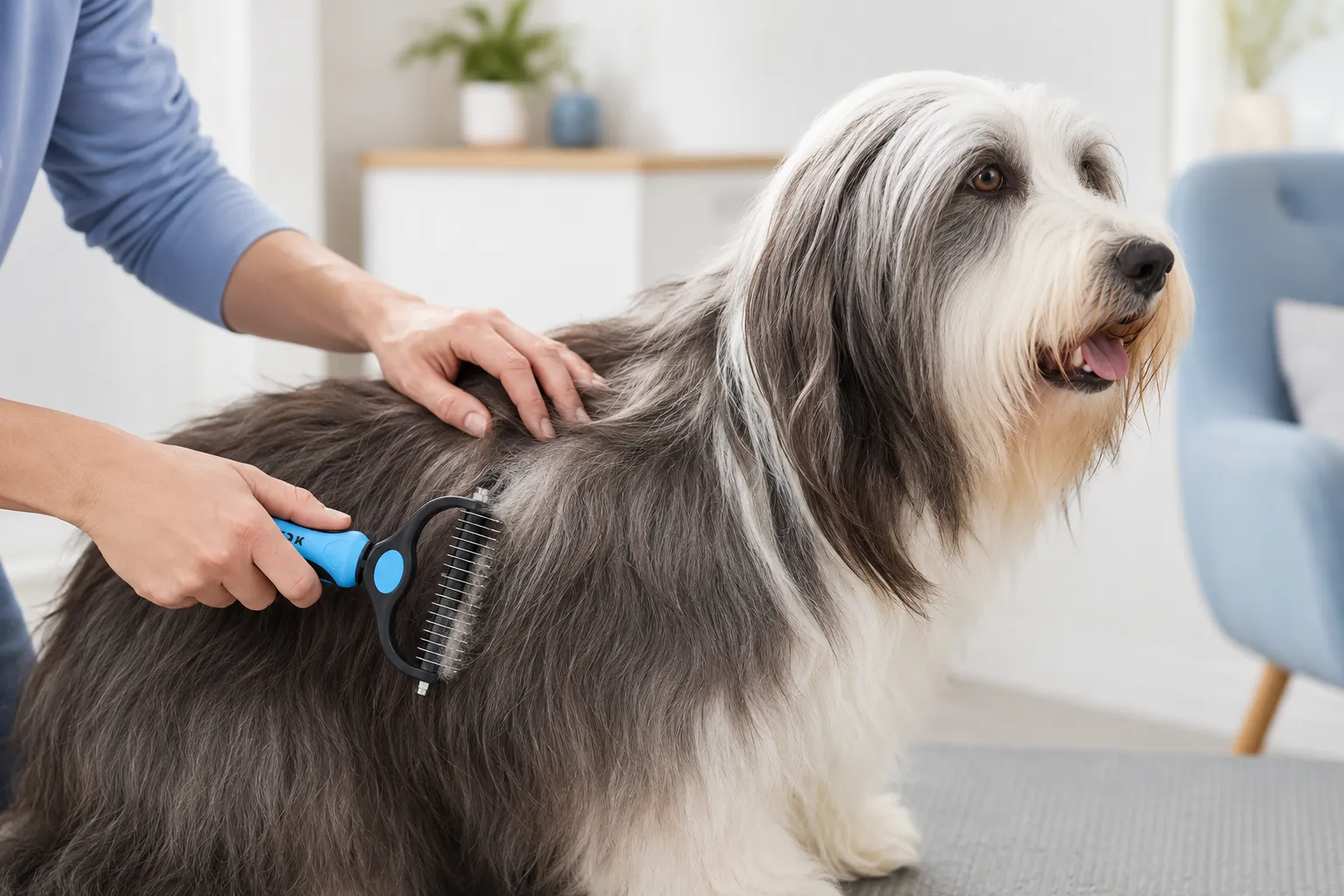
For loose undercoat on suitable tangle-free sections. It may collect hair that is already releasing, but it does not stop the natural shedding cycle.
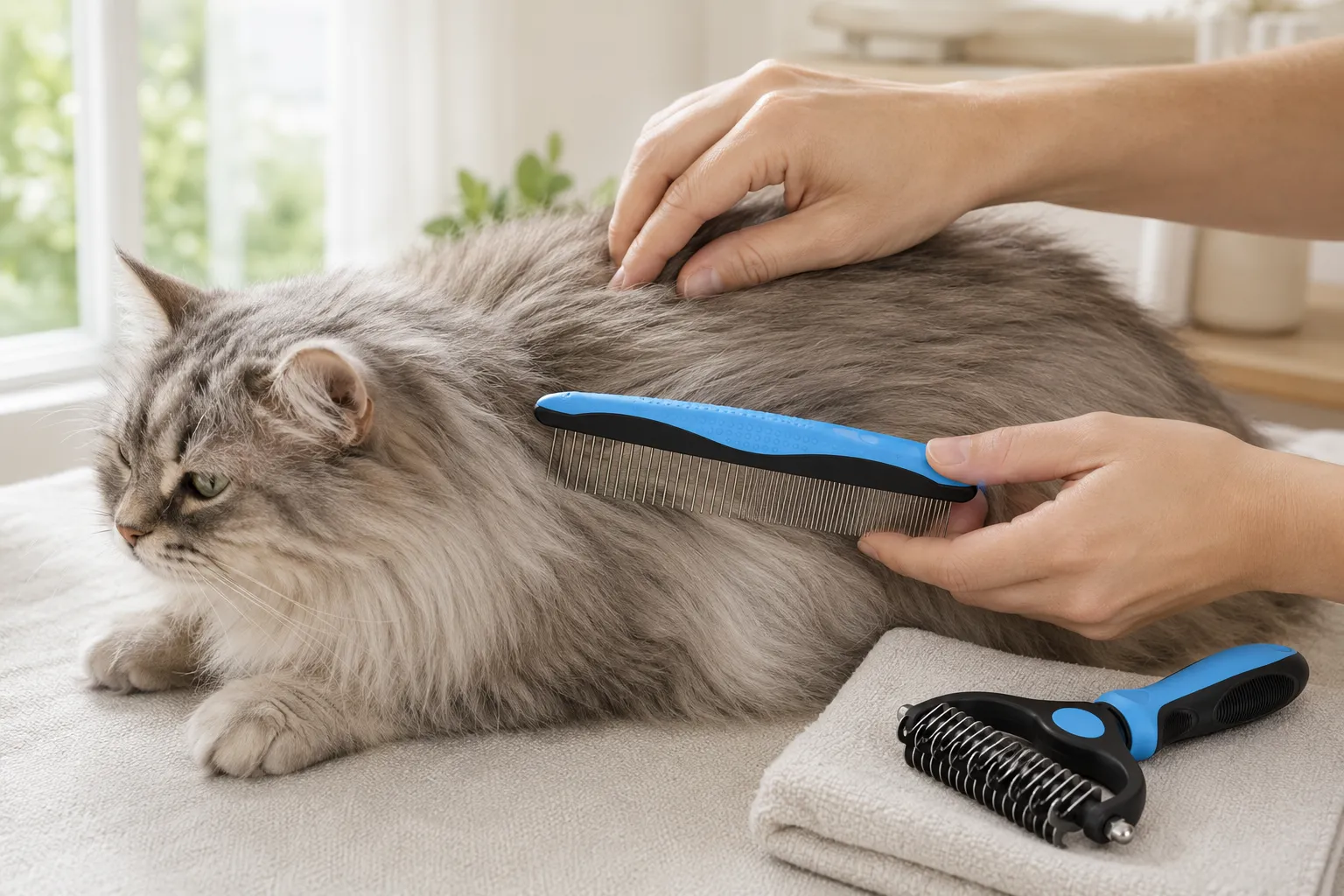
A cautious approach is to begin with the wider-spaced section to check coat depth and locate resistance, then use the more closely spaced section only when the coat already passes freely. Do not force either section through a snag.
Safe Use and Important Limits
Dense, widespread, painful, pelted, or skin-level matting should be assessed by a qualified professional groomer. Contact a veterinarian when skin appears painful, damaged, red, bleeding, swollen, damp, irritated, or otherwise abnormal.
Helpful Grooming Guides
FAQ Preview
The set includes two physical tools: one dual-sided undercoat rake and one two-sided metal grooming comb. The rake has a wider 9-tooth side and a denser 17-tooth side. The comb has wider-spaced and closely spaced sections. See the complete Docrok grooming combo guide for the full product overview.
The wider 9-tooth side is intended for manageable light tangles in suitable coat areas. It is not intended for dense, painful, widespread, pelted, or skin-level matting. Stop rather than pulling through strong resistance. The 9-tooth and 17-tooth rake comparison explains the two functions in more detail.
The denser 17-tooth side is intended to collect loose undercoat from a suitable section that is already free of tangles. It is not a mat-removal side. Check the section first, use light contact, and stop if the rake repeatedly snags, drags, or appears to contact the skin directly.
It may suit some cats with a suitable dense, medium-length, or long coat, but not every cat. Coat depth, undercoat, skin sensitivity, body area, behavior, and existing tangles all matter. Stop for repeated snagging, direct skin contact, redness, or discomfort. See whether an undercoat rake may suit a cat.
It may not be the best fit for many smooth, sparse, or very short coats. Some short-haired pets have an undercoat, but the rake still needs enough coat depth for controlled movement without direct pressure toward the skin. The short-haired pet suitability guide explains the main limits.
A mat is beyond cautious home grooming when it is dense, widespread, painful, difficult to separate from the skin, or impossible to assess clearly. Dampness, odor, redness, sores, bleeding, swelling, or other abnormal skin also require stopping. Contact a professional groomer; contact a veterinarian when the skin appears painful, damaged, or otherwise abnormal. See when matting is too severe.
DocRokBrush.com is an independent informational website. It is not the manufacturer, Amazon, a veterinary clinic, or a professional grooming service. As an Amazon Associate I earn from qualifying purchases.