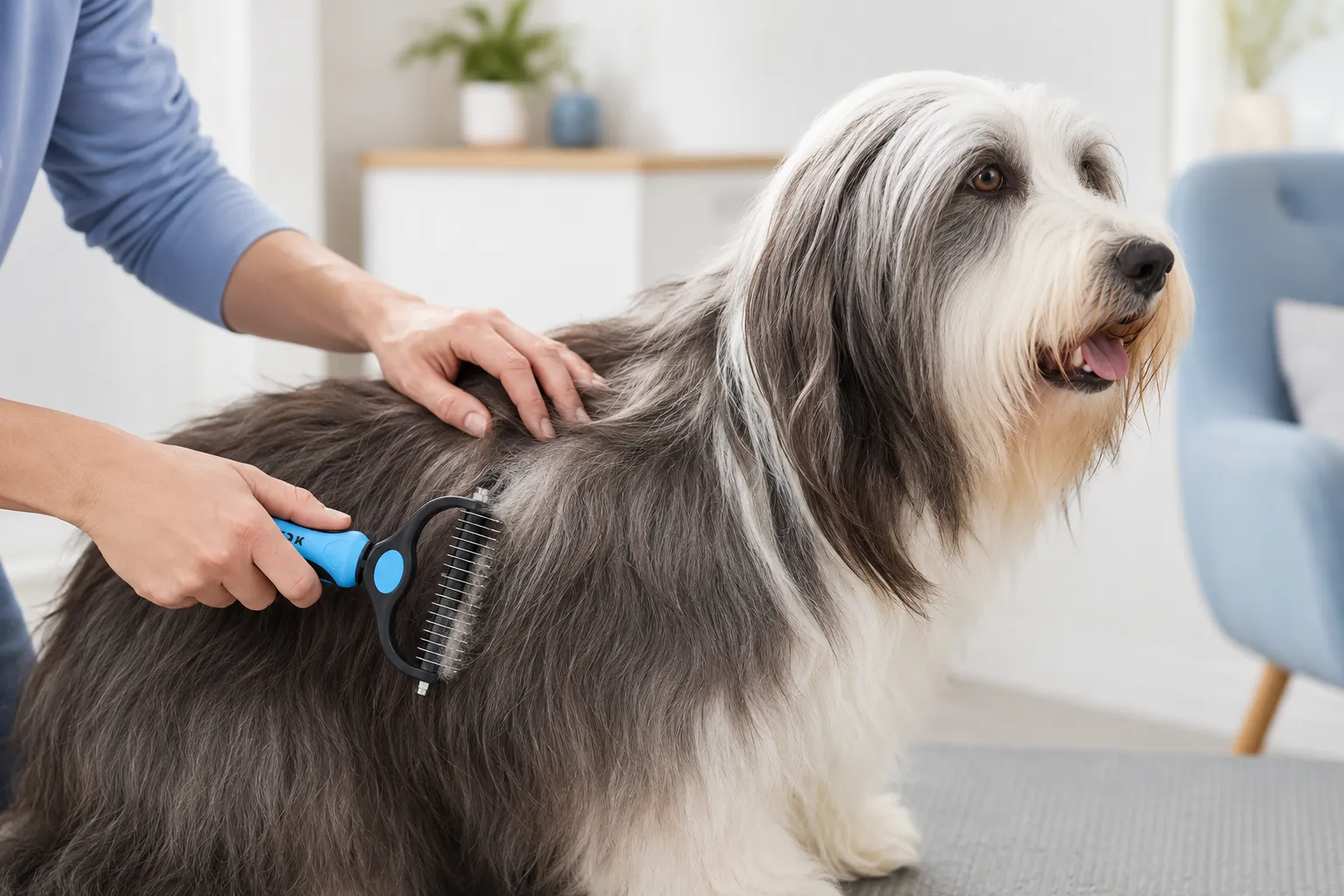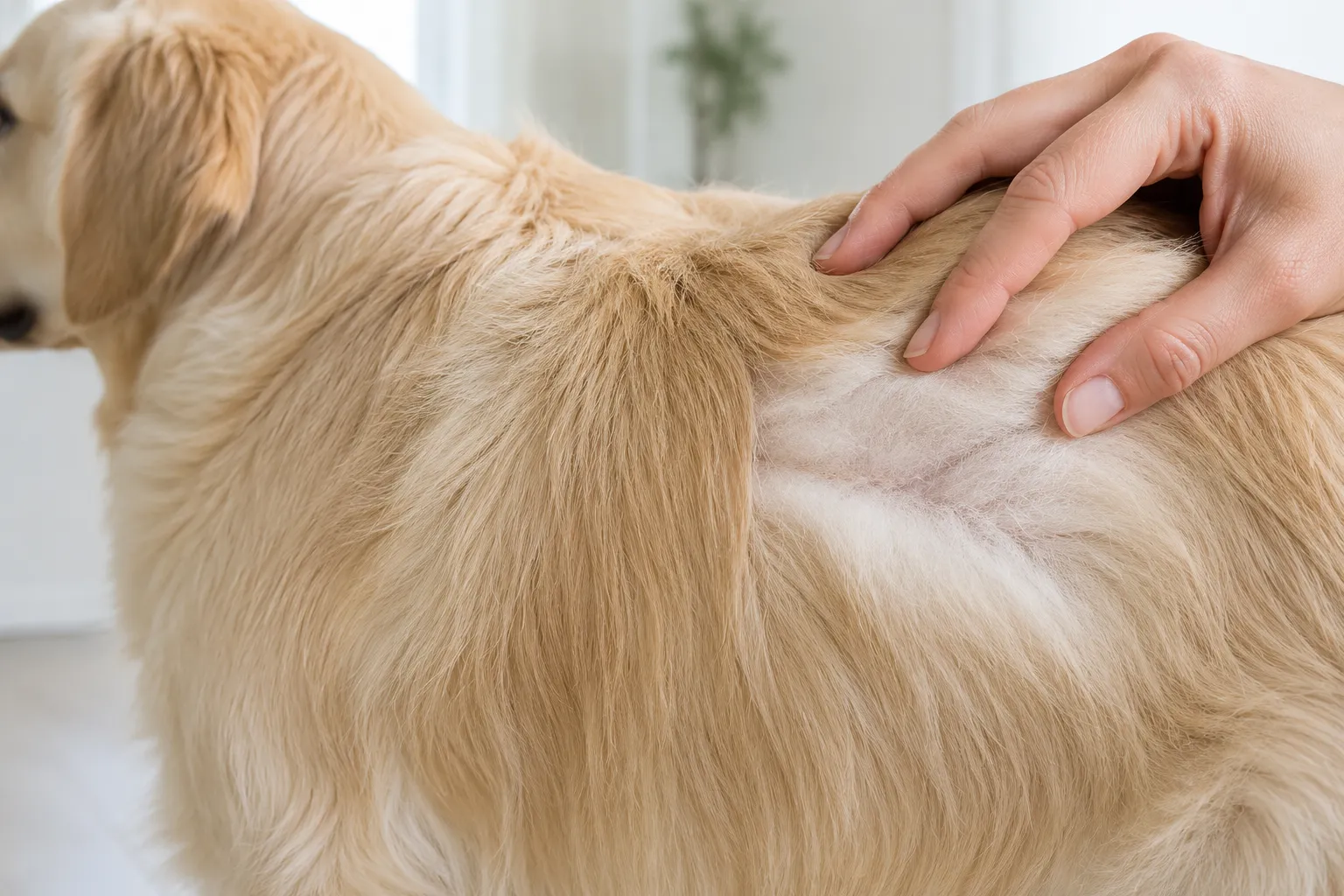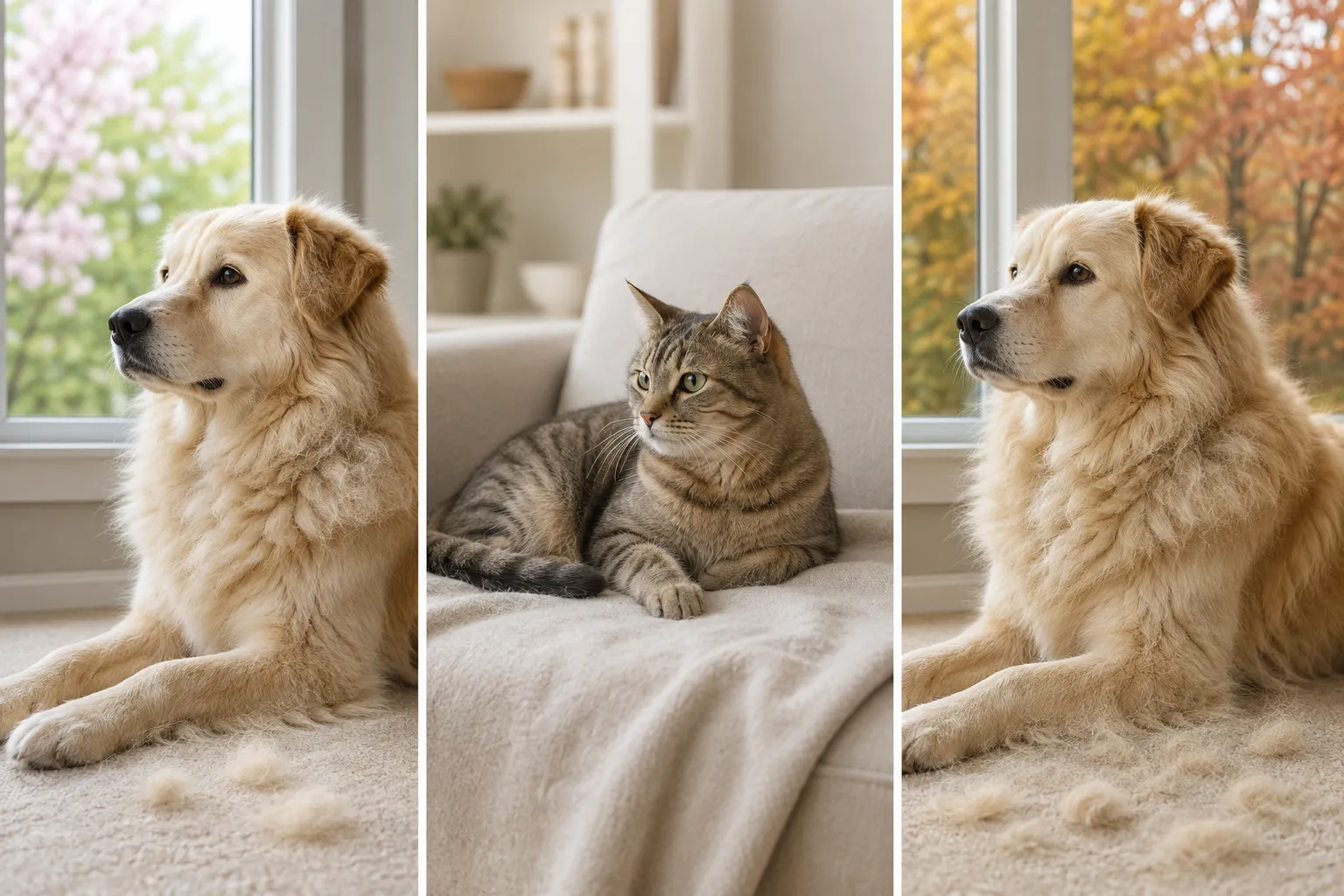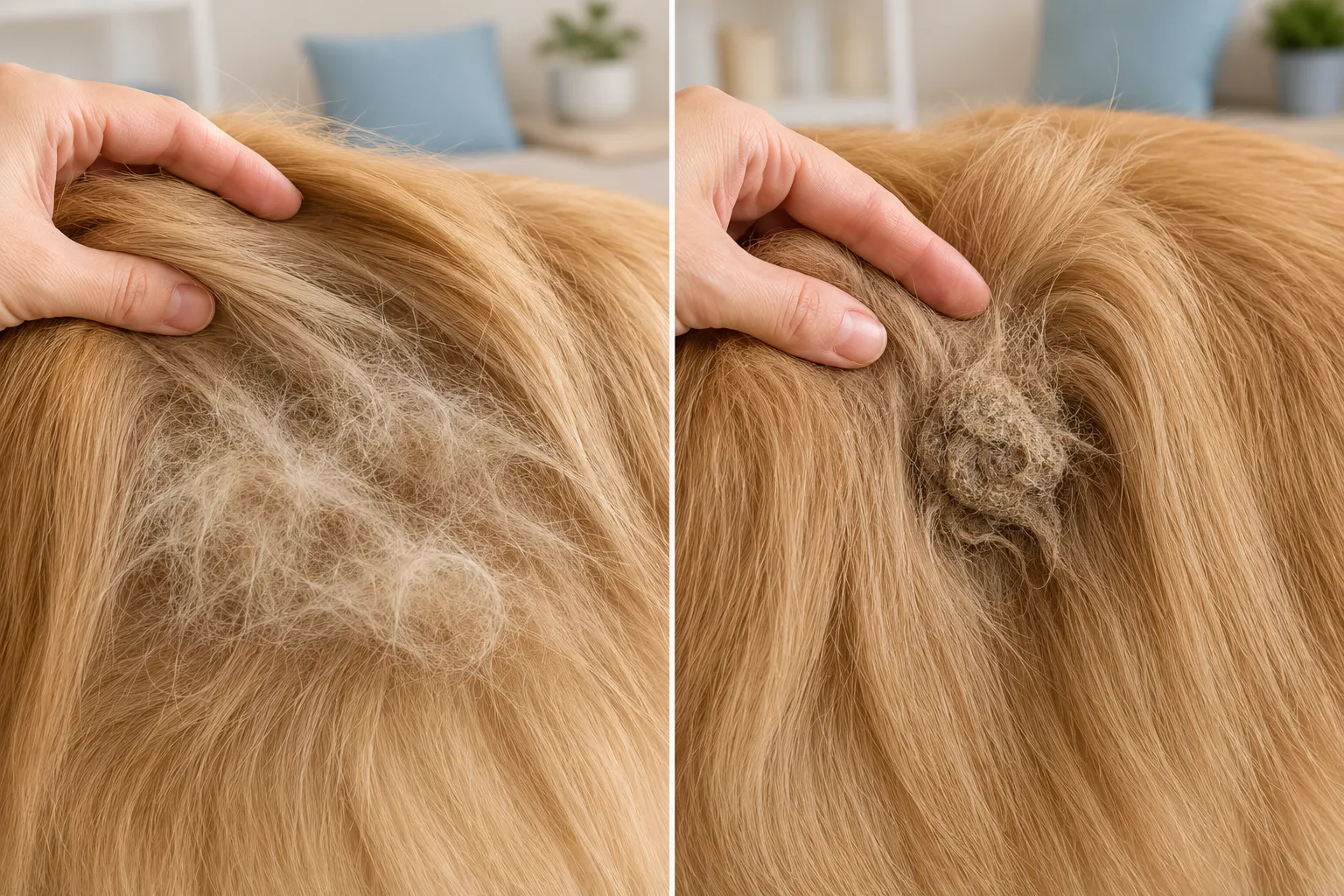
Deshedding and dematting solve different coat problems. Deshedding collects loose hair that is already releasing from the coat, especially loose undercoat. Dematting addresses hair that has caught, interlaced, or compacted into a tangle or mat.
A tool meant for loose coat should not be pulled through compacted fur. Identify the resistance first, then choose the surface that matches it.
Quick Answer: Shedding is the normal release of hair from the coat. Loose undercoat is soft inner hair that has begun separating and may remain trapped beneath the outer coat. Deshedding tools collect that loose hair. A tangle is a smaller area where hairs catch and interlace, while a mat is a denser, compacted section that may sit close to the skin. Dematting tools are intended only for manageable tangles. Do not force a rake through a tight mat.
Loose undercoat should be collected. Compacted hair should be assessed before it is worked on.
What Deshedding Means
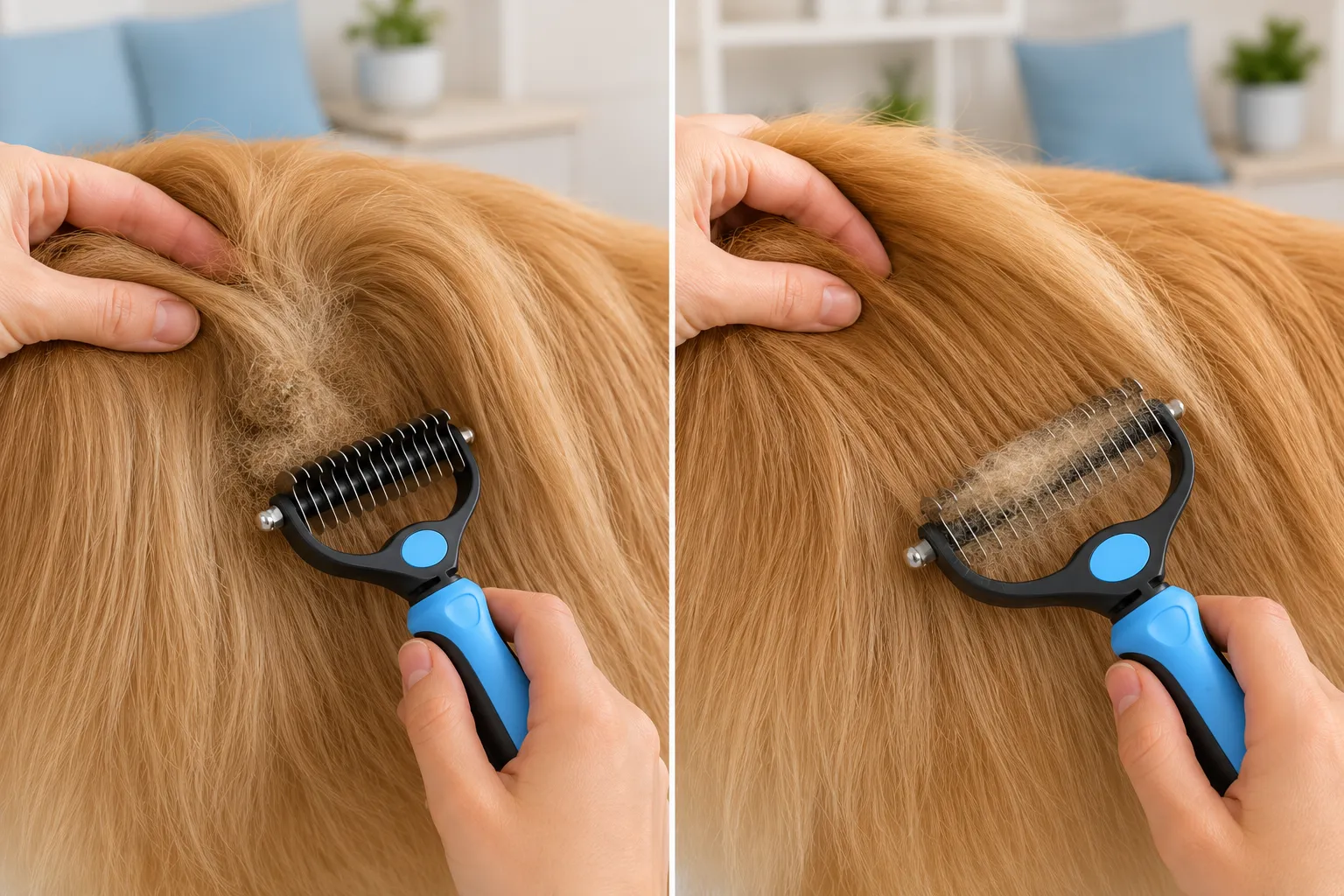
Deshedding means collecting loose hair that is already releasing from the coat. On pets with a suitable double coat, much of that hair may be soft undercoat held beneath the outer layer.
The coat usually remains flexible. Soft tufts may rise through the topcoat or come away with gentle combing rather than staying locked in one hard clump.
Deshedding does not stop the natural shedding cycle or remove the entire undercoat. Its purpose is to collect some coat that is already loosening.
Tool fit still depends on coat type. A pet can shed heavily without needing a deep undercoat rake, and long hair alone does not prove that substantial undercoat is present.
What Dematting Means
Dematting deals with hair that has become interlaced or compacted.
A tangle is a localized area where hairs catch but remain relatively loose. Its outer edges may separate gently, and the skin can still be checked.
A mat is denser. It may feel thick, hard, chunky, or flat, and it can sit close to the skin. The skin may be difficult to see, the comb may stop repeatedly, or the entire clump may move with the skin.
Consumer sources use “tangle,” “knot,” and “mat” inconsistently, so physical signs matter more than labels. A small mat can still be too tight for home grooming.
Dematting at home should be limited to a manageable tangle. Dense, painful, widespread, pelted, or skin-level matting needs professional assessment rather than stronger pulling or repeated tool passes.
How to Identify Which Problem Is Present
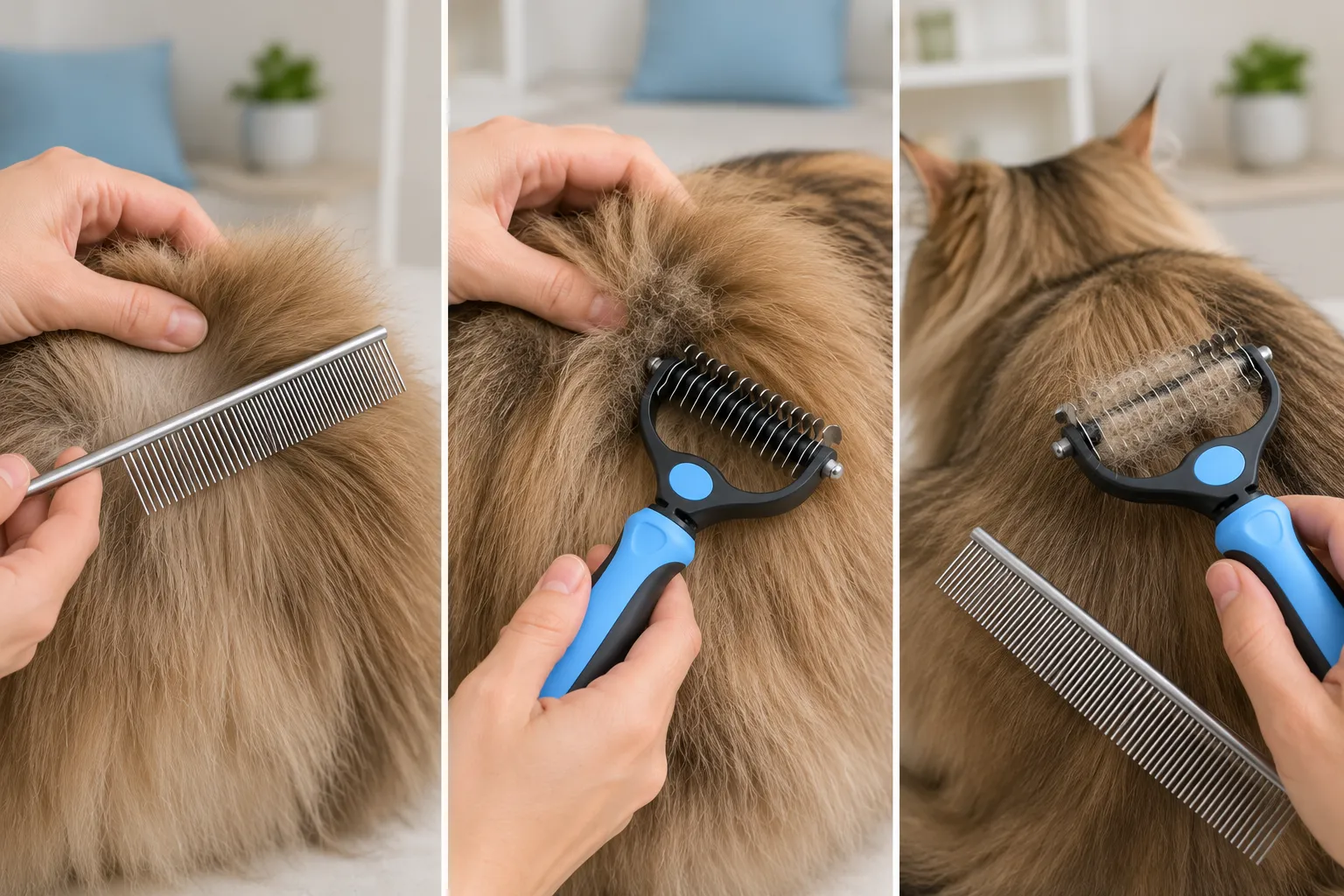
Begin with your fingers, then use the wider-spaced section of a metal comb without force.
If the comb passes through while collecting soft, loose hair, the main task is probably deshedding. If it catches at one small, flexible spot, you may be dealing with a manageable tangle. If the hair forms a broad, hard, or flat section—or the skin cannot be checked—stop.
A useful distinction is the type of resistance:
| Coat condition | Likely task |
|---|---|
| Soft loose hair distributed through the coat | Deshedding |
| One small area of localized resistance | Detangling or limited dematting |
| Dense, fixed, or skin-level compaction | Professional assessment |
| Red, broken, painful, wet, or abnormal skin | Veterinary assessment |
The comb check is not diagnostic. It is a practical way to locate hidden resistance before choosing a surface.
Which Docrok Surface Matches Each Task
According to the seller’s product description and the project photographs, the wider 9-tooth side of the Docrok rake is intended for manageable tangles, while the denser 17-tooth side is intended for loose-undercoat removal.
Use the 9-tooth side selectively on a small section. It is not a whole-body brush or a tool for a dense skin-level mat.
Use the 17-tooth side only on a suitable, tangle-free section with loose undercoat. It should not be pulled through a mat.
The included metal comb is the checkpoint. Use the wider teeth first to locate resistance and recheck the coat afterward. Move to the finer teeth only after the wider section passes freely.
You can also review the Docrok grooming brush and metal comb combo to see how the two rake surfaces and comb are arranged.
Can a Pet Need Both Tasks?
Yes. Loose undercoat and localized tangles can exist in the same coat, but that does not create one mandatory sequence.
One area may contain a manageable tangle while another only holds loose coat. A pet may also need only the comb, only the deshedding side, or professional help.
The 9-tooth side does not always have to come first. If a section is already free of tangles and loose undercoat is the only issue, the 17-tooth side may be the only rake surface needed there.
Treat each section separately and skip any step it does not need.
When Home Grooming Should Stop
Resistance is information. Stop, remove the tool, and inspect rather than pulling harder.
End the session if the comb or rake repeatedly catches, the skin moves with the mat, redness appears, or the pet flinches, pulls away, growls, hisses, scratches, snaps, or tries to leave.
Do not use scissors near a tight mat. Mats can sit close to the skin, and the skin may be pulled upward into the compacted hair where it is difficult to see.
A professional groomer should assess dense, widespread, pelted, or skin-level matting. Contact a veterinarian when skin is painful, red, broken, bleeding, wet, has discharge or odor, or otherwise appears abnormal.
Final Takeaway
Deshedding collects loose coat that is already releasing. Dematting addresses localized tangles or compacted hair. They are different tasks, and not every grooming session needs both.
Use coat condition—not a fixed tool order—to decide what happens next. Loose hair can be collected. A manageable tangle may be worked carefully. Dense resistance means stop.
As an Amazon Associate I earn from qualifying purchases.
Sources
- VCA Animal Hospitals — Grooming and Coat Care for Your Dog
- VCA Animal Hospitals — Grooming and Coat Care for Your Cat
- VCA Animal Hospitals — How to Groom a Long-Haired Cat
- American Kennel Club — How to Choose the Right Dog Brush for Your Pet
- American Kennel Club — Dog Shedding: What to Expect and How to Manage It
- PetMD — Pet Grooming: How to Handle Matting in Dogs and Cats
- Amazon — Docrok Pet Grooming Combo