Remove loose undercoat by working only on hair that is already releasing—not by trying to strip out as much coat as possible. Check for tangles, use light pressure with hair growth, and reassess after each controlled pass.
Here, overbrushing means repeatedly working one area, pressing harder than needed, or continuing after useful loose-coat removal has slowed or the pet shows irritation or discomfort.
Quick Answer: Remove loose undercoat only from a suitable dense or double coat. Check the skin and make sure the working section is free of tangles. Move the deshedding rake with the direction of hair growth and use light pressure. After each controlled pass, clear the tool and check the coat, skin, and pet before deciding whether another pass is needed. Stop when less loose hair is collected, the metal comb passes more freely, or redness, repeated snagging, uneven thinning, or discomfort appears. Do not keep brushing one spot just because some hair is still coming out.
Confirm That the Hair Is Loose Undercoat
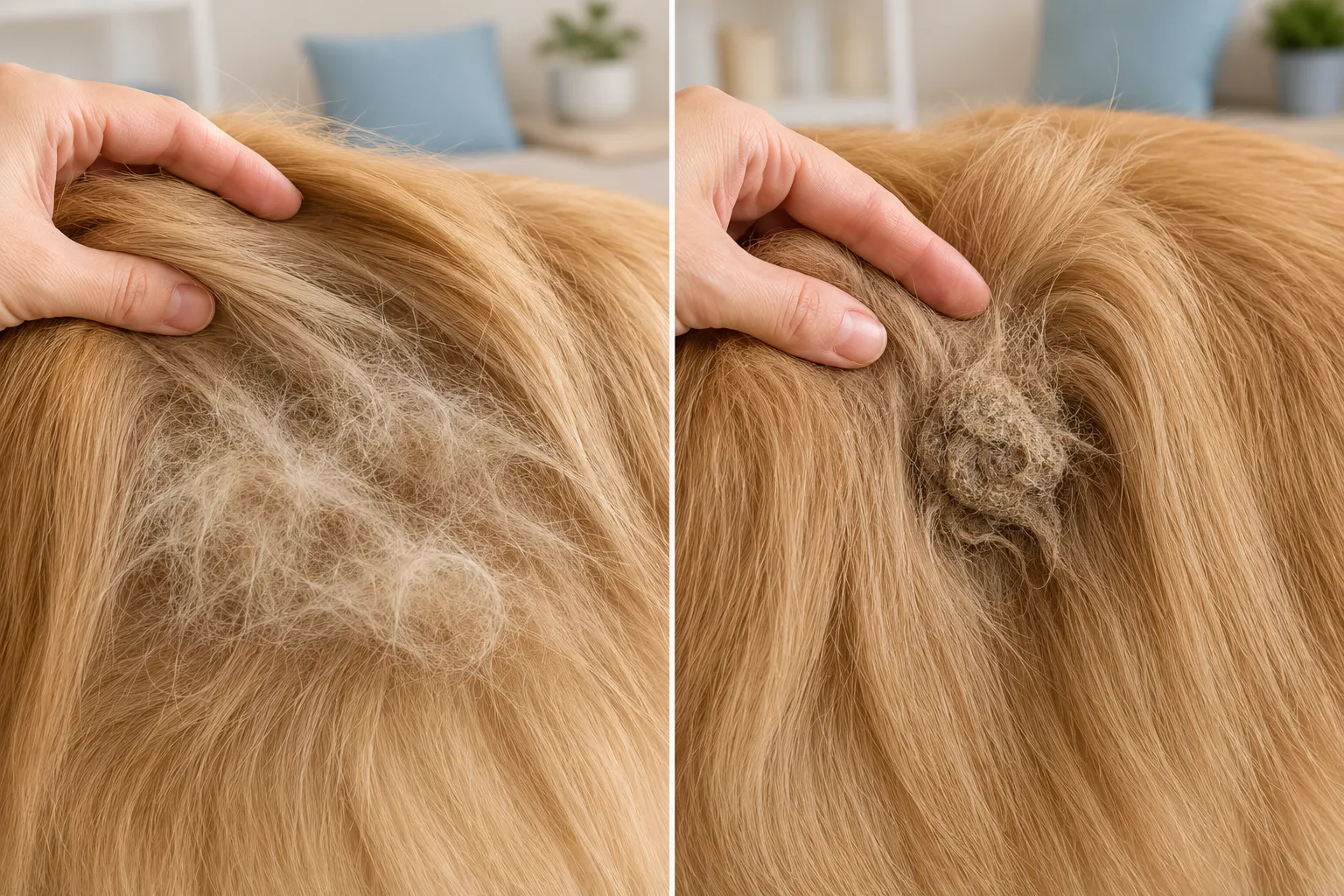
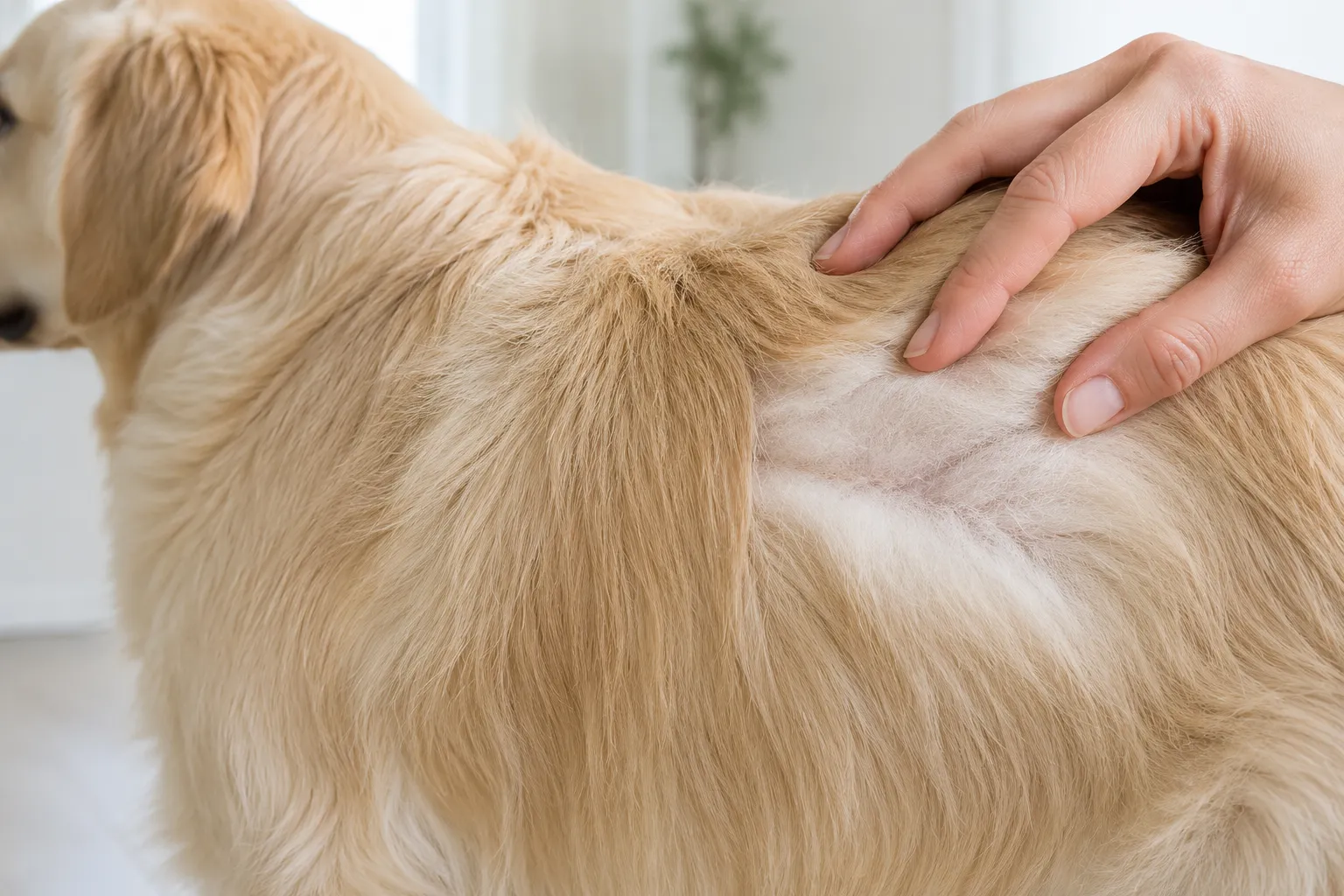
Loose undercoat is soft inner hair already separating beneath the outer coat. It may appear as soft tufts or come away with gentle combing. The section should remain flexible, and a wider-spaced metal comb should move through without force.
Localized resistance suggests a different problem. If the comb catches at one fixed spot, the hair may be tangled. Dense or skin-level compaction is not ordinary loose undercoat.
The undercoat is a normal part of the coat. Collect hair already releasing rather than trying to remove the whole layer.
Prepare a Tangle-Free Working Section
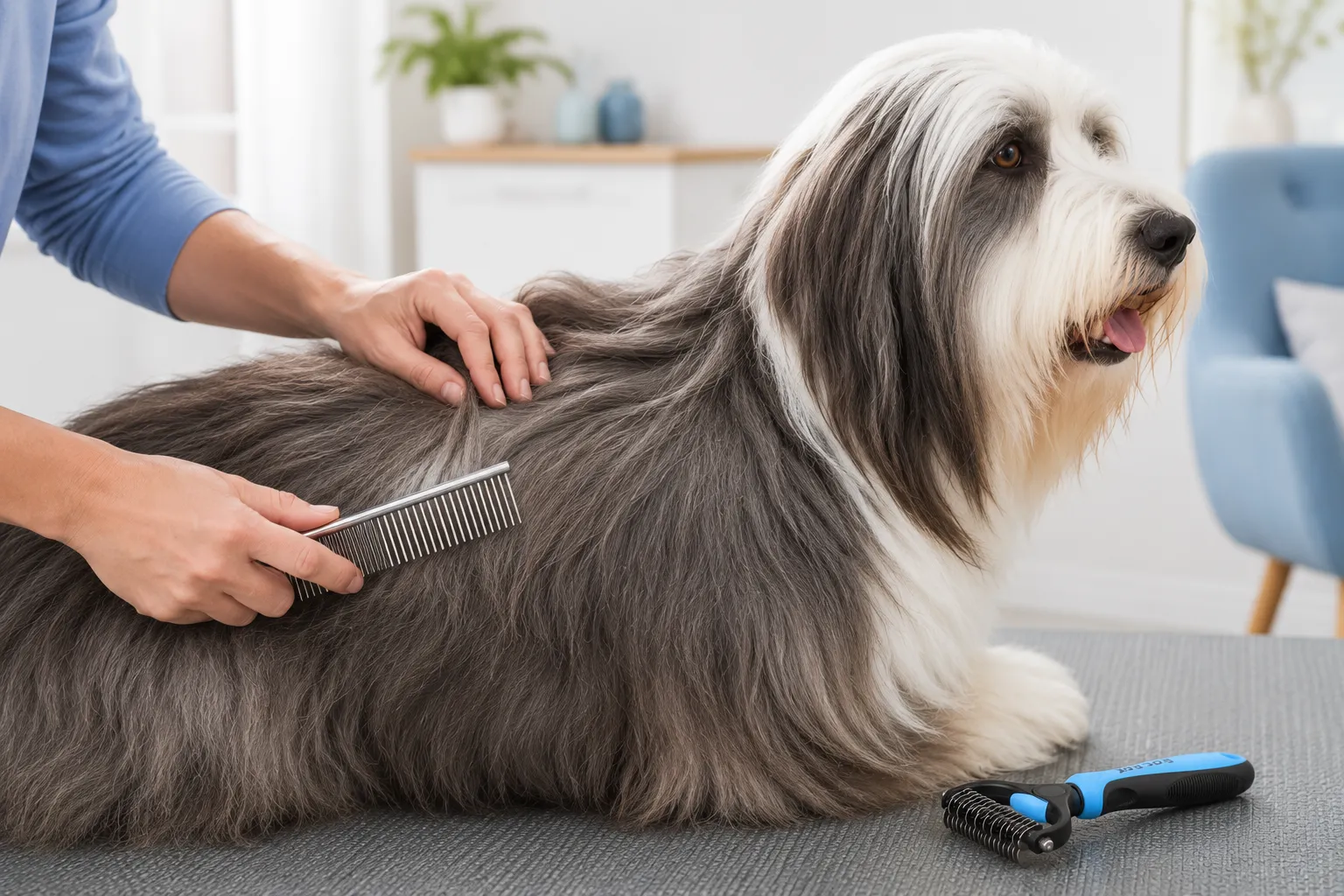
Check the section with your hands and the wider part of the metal comb. Look for tangles, mats, debris, redness, sores, scabs, or unusual sensitivity.
Tangles should be addressed before using the deshedding surface. Do not try to save time by pulling a dense rake through resistance. If a small snag does not separate without force, stop and reassess rather than increasing pressure.
Choose a broad, well-coated body section where the tool path is visible. As conservative site guidance, avoid the face, ears, paws, armpits, lightly coated belly, groin, genital area, and bony joints.
Long hair does not automatically mean a deep rake is suitable. Coat depth and tool movement matter more than length alone.
Use Controlled, Condition-Based Passes
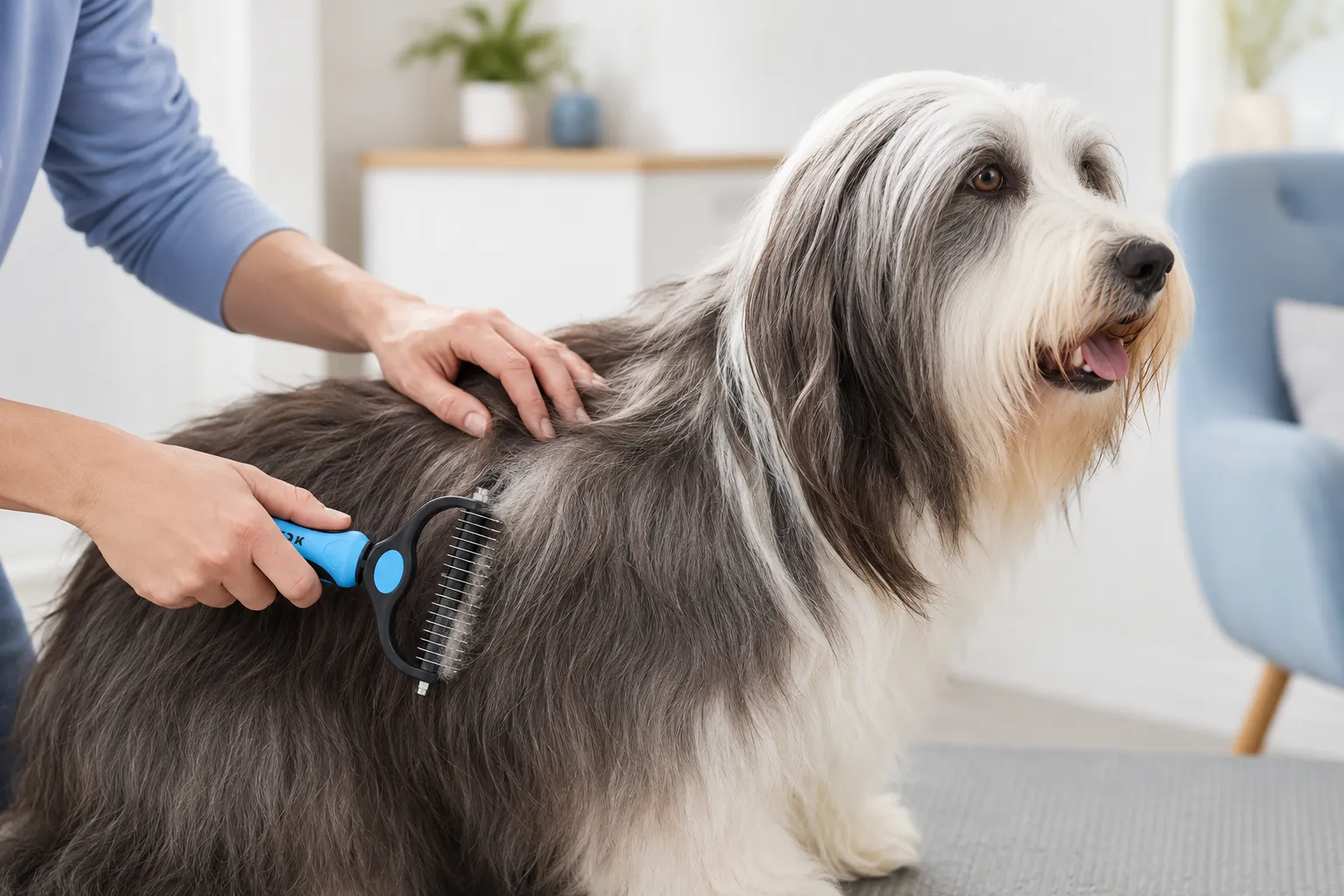
Move the rake generally in the direction of hair growth. Let the teeth travel through the coat rather than pressing them into the skin.
Work on one visible section at a time. After a controlled pass:
- Clear collected hair from the tool.
- Check whether the rake moved freely.
- Inspect the skin and coat.
- Recheck with the wider comb teeth.
- Continue only if the section still needs it.
There is no universal pass count, pressure, session length, or target amount. A shedding coat may still release some hair after enough has been removed for that session.
Stop when less hair is collected, the wide comb passes more freely, and the coat still looks even. Zero hair is not the finish line.
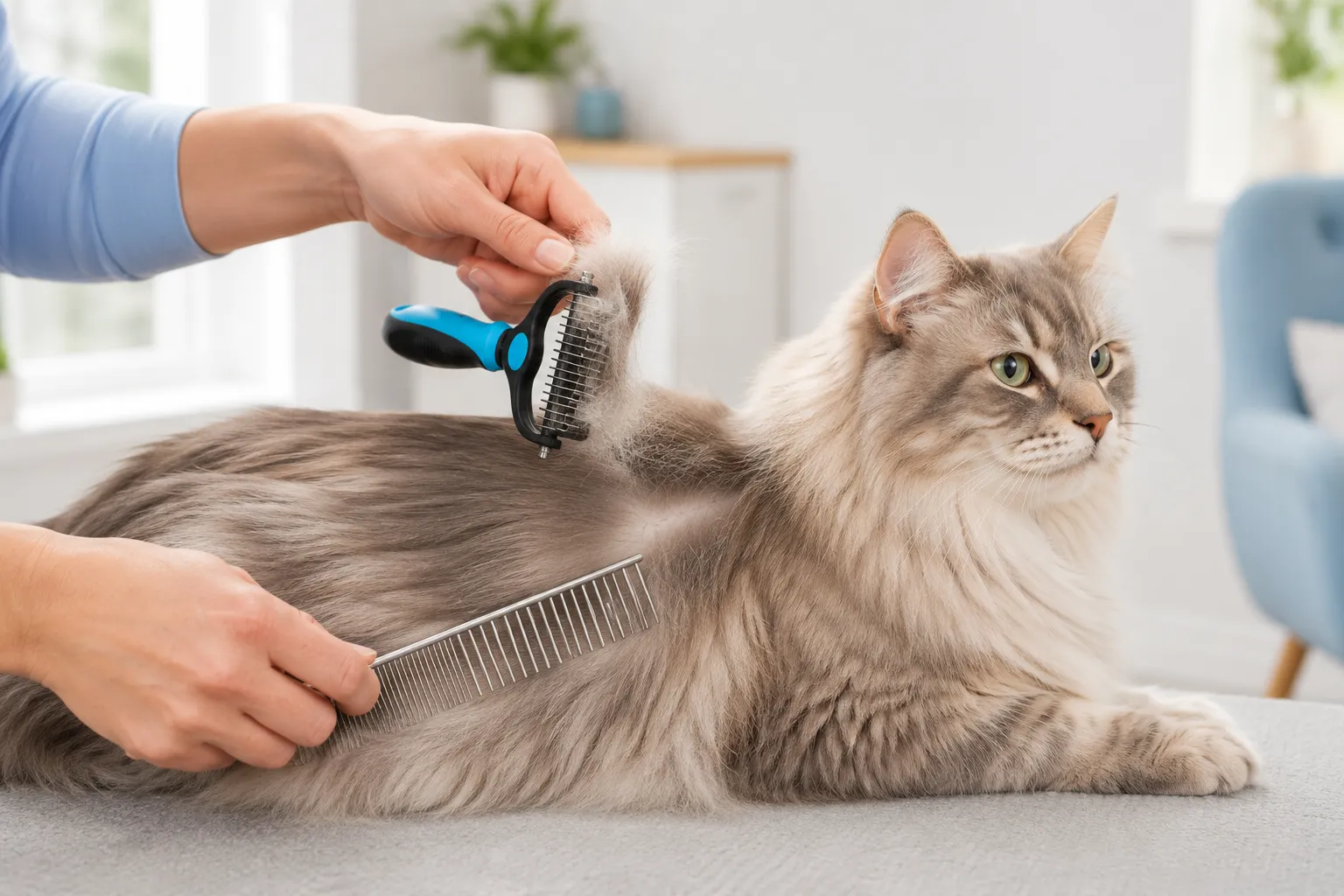
Signs of Overbrushing
Stop when the skin becomes red, irritated, unusually warm, tender, scratched, or newly exposed through a visibly thinned patch. Repeated snagging is also a stopping sign, not a reason to press harder.
Watch the pet as closely as the coat. Stop or pause if the pet repeatedly turns toward the tool, becomes tense, pulls away, tries to leave, growls, hisses, scratches, or snaps.
Other warning signs include repeatedly returning to one productive patch, increasing pressure as collection slows, continuing through resistance, or creating an unevenly thinned area.
Sudden bald patches, major coat changes, persistent itching, wounds, odor, discharge, bleeding, pain, or abnormal skin need veterinary attention. Do not try to diagnose the cause during grooming.
Why Frequency and Results Vary
Loose-hair release varies with coat type, season, environment, and the individual animal. That is why a universal rake schedule is not appropriate. One coat may release a noticeable amount while another needs little or no rake work.
Base the decision on current coat condition. If the section is tangle-free, the tool fits, the skin looks normal, and loose undercoat is present, limited deshedding may be appropriate.
Where Docrok Fits
According to the Amazon seller’s product information, the dense side of the rake is intended for deshedding. Project photographs confirm that this is the 17-tooth side, while the wider 9-tooth side is intended for manageable tangles.
The included metal comb can locate resistance before raking and check the section afterward. Use the wider teeth first and stop if they catch.
You can view the Docrok grooming brush and metal comb combo to see how the rake and comb are arranged. Individual coat fit still matters, and the seller’s marketing claims are not independent safety evidence.
Final Takeaway
Confirm that the hair is loose, work on a suitable tangle-free section, use light controlled passes, and reassess before continuing. The goal is controlled loose-coat removal—not the largest possible pile of hair.
As an Amazon Associate I earn from qualifying purchases.
Sources
- VCA Animal Hospitals — The Importance of Your Pet’s Skin and Coat and the Role of Diet
- VCA Animal Hospitals — Grooming and Coat Care for Your Dog
- VCA Animal Hospitals — Grooming and Coat Care for Your Cat
- American Kennel Club — How to Choose the Right Dog Brushes
- American Kennel Club — Dog Shedding: What to Expect and How to Manage It
- FURminator — Undercoat deShedding Tool Instructions
- Amazon — Docrok Pet Grooming Combo