A double coat has two layers: a softer undercoat close to the skin and a coarser outer layer of guard hairs. Grooming should remove loose hair without treating the full undercoat as unwanted. Double coats may be short, medium, long, plush, or wire-textured, so they do not all need the same tools.
Quick Answer: A double coat has a softer inner undercoat beneath a coarser outer layer of guard hairs. The undercoat contributes to insulation and coat density, while the outer coat helps protect the body and skin from weather and environmental exposure. Many double-coated dogs release more undercoat during seasonal coat changes, although some shed lightly throughout the year. Groom with coat-appropriate tools, address tangles before using an undercoat rake, work gently in the direction of hair growth, and stop for repeated snagging, redness, pain, or discomfort. Do not try to remove the entire undercoat.
What a Double Coat Is
A double coat is a two-layer coat structure, not simply “a lot of fur.”
The undercoat
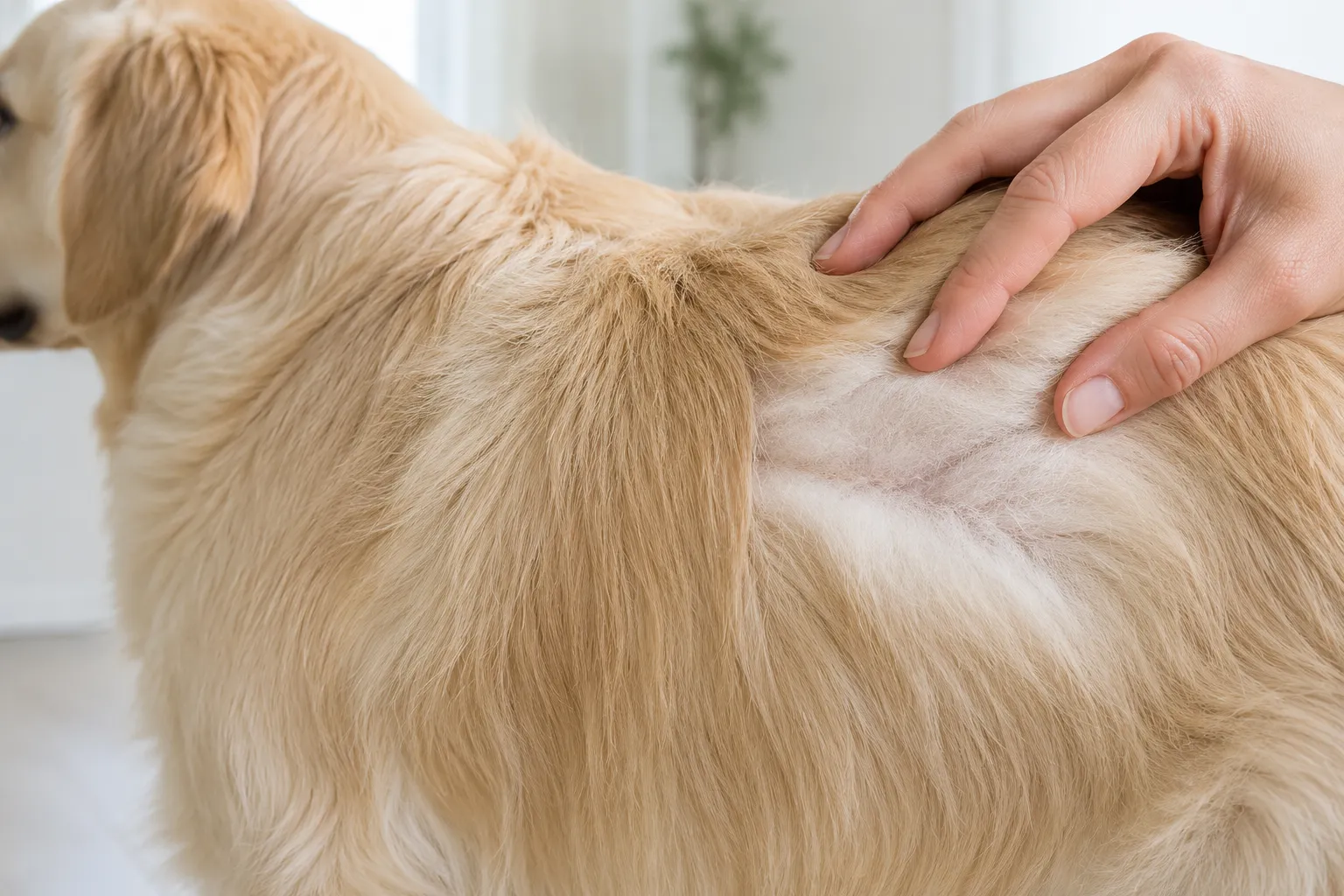
The undercoat is generally softer, finer, denser, and closer to the skin. It contributes to coat fullness and insulation and may release in soft tufts.
The outer coat and guard hairs
Guard hairs form the coarser visible layer and help create the coat’s texture and protective surface. A short-haired dog can still have a double coat, while a long-haired dog is not automatically double-coated.
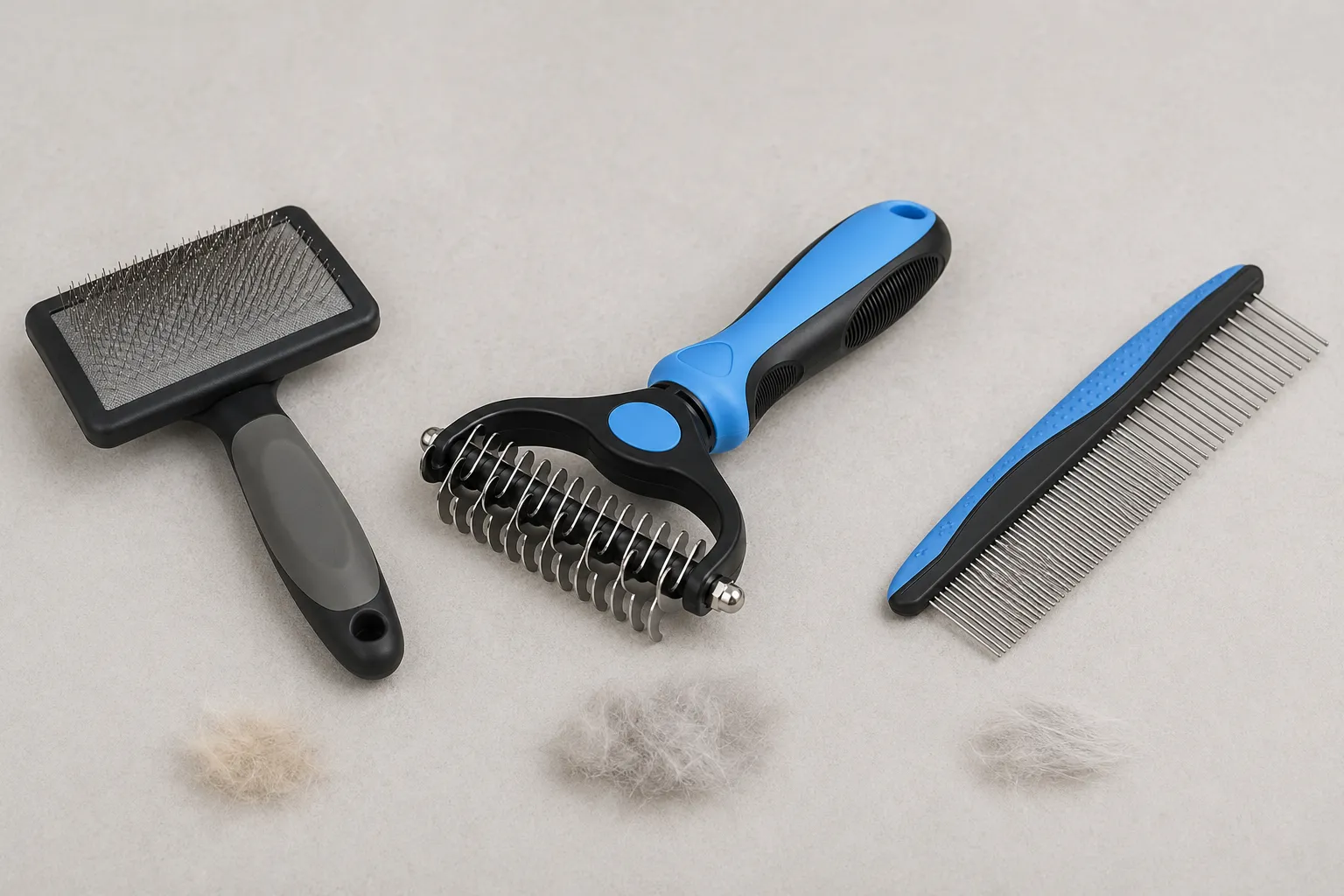
What Each Layer Does
The undercoat adds density and insulation, while guard hairs help shield the softer inner layer and skin from weather and debris.
Both layers matter. The goal is to remove loose hair, keep the coat passable, and preserve an even two-layer structure—not remove the full undercoat or repeatedly pull guard hairs.
Why Double Coats Shed
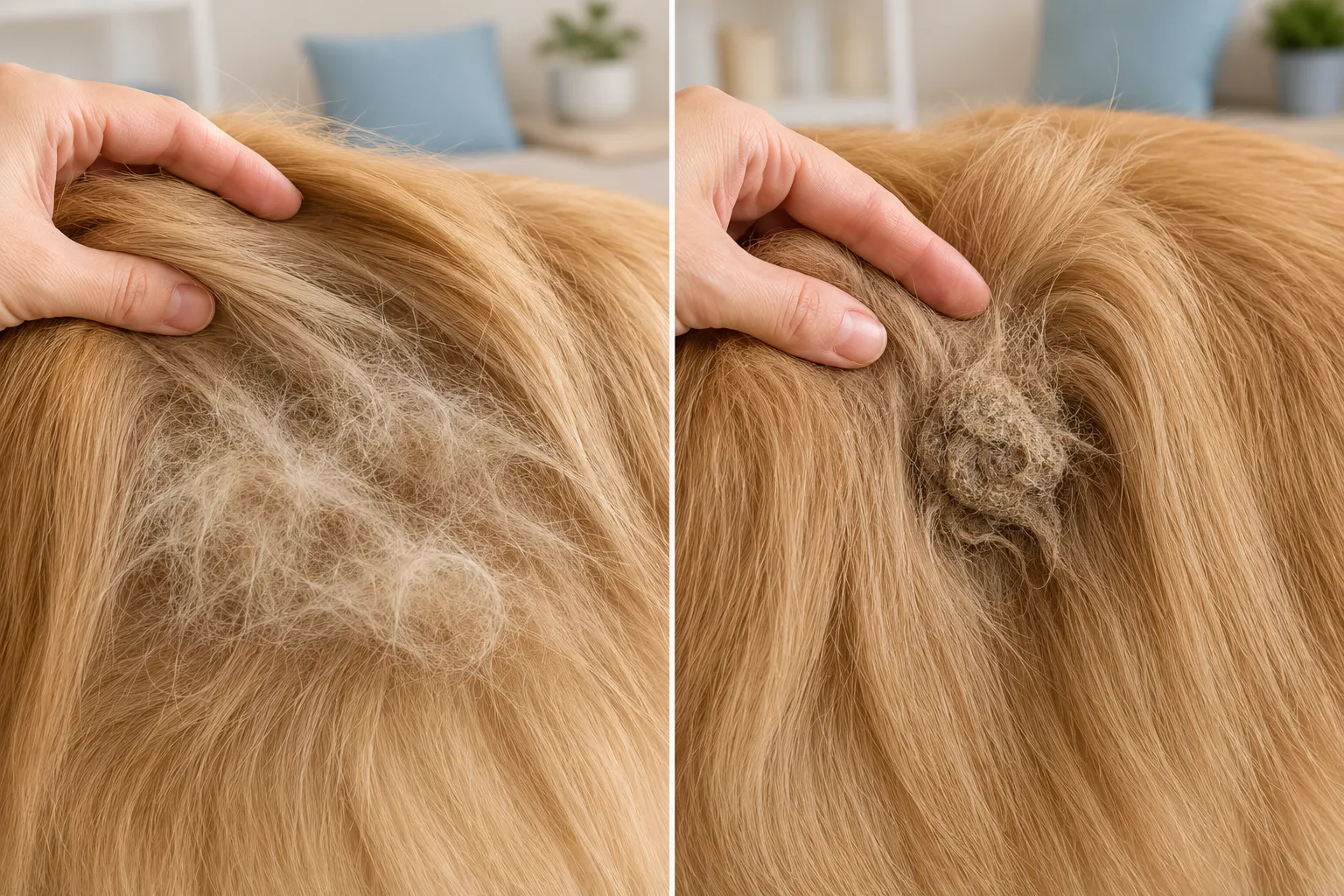
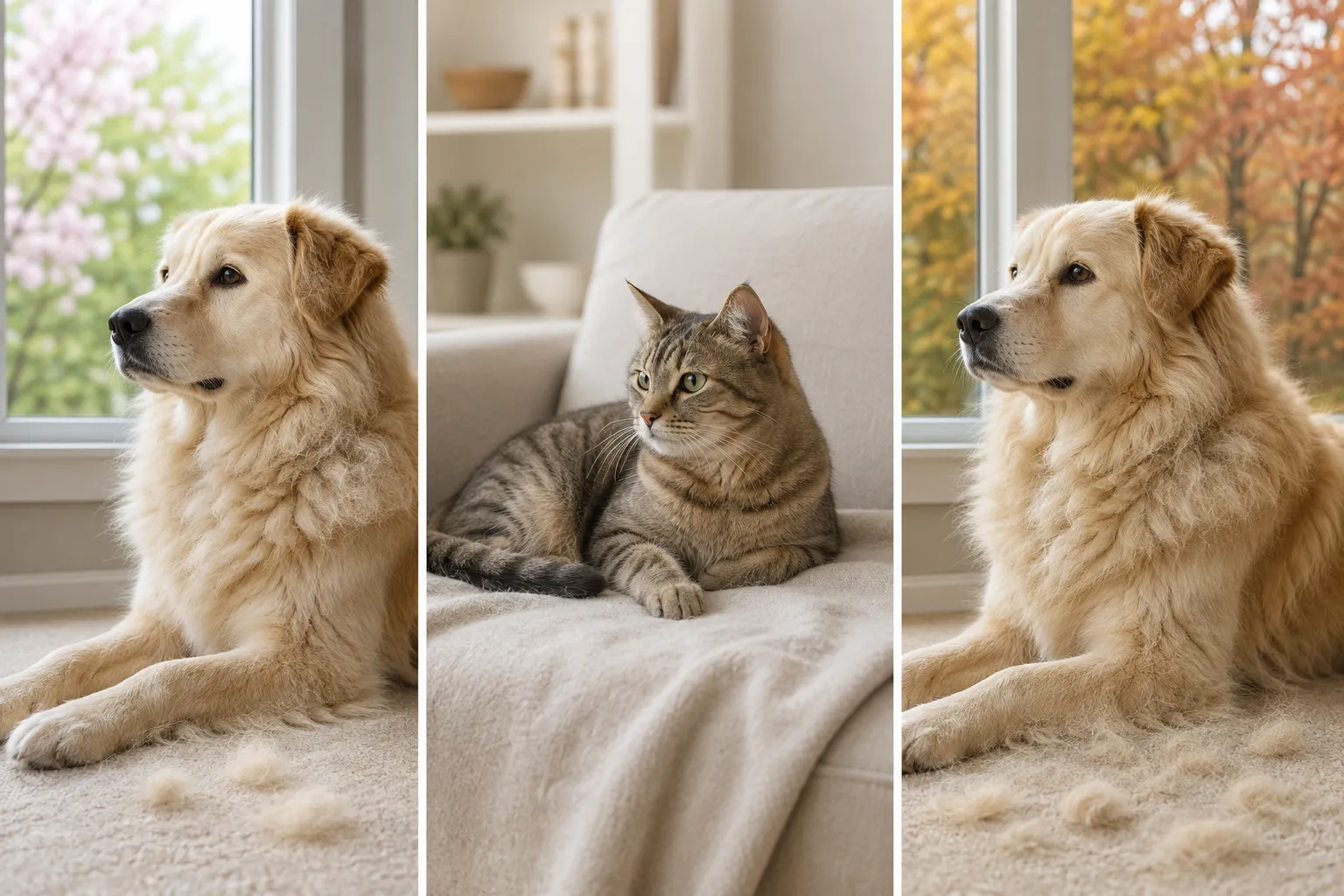
Double-coated dogs may shed heavily because many fine undercoat hairs can become loose beneath the guard hairs. Many release more during seasonal transitions, while some also shed lightly year-round. Timing and amount vary with coat type, climate, environment, and the individual dog.
Bald patches, sudden unusual hair loss, irritated skin, bleeding, or uneven thinning are not ordinary shedding signs. Stop grooming and contact a veterinarian.
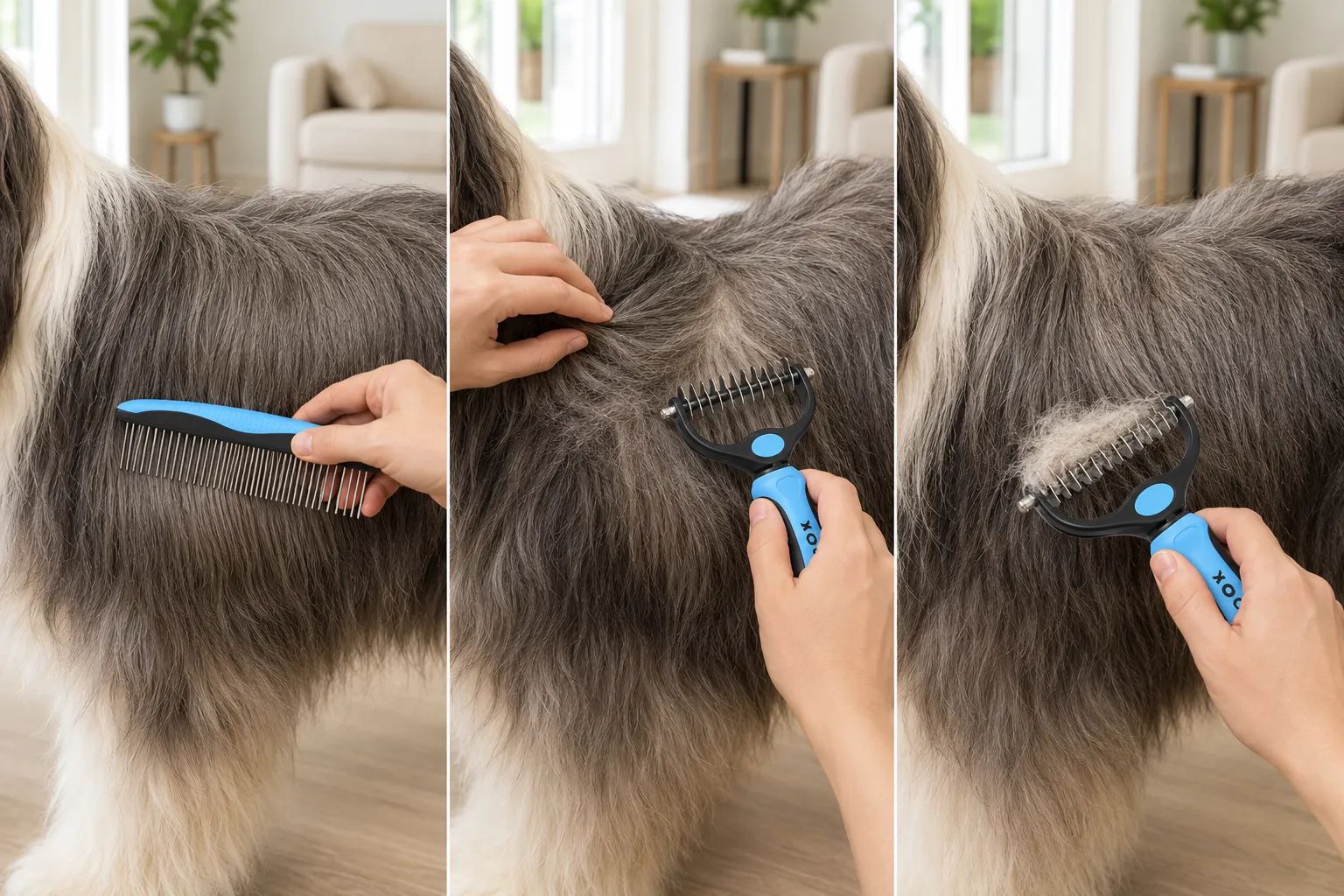
Tools Used on Double Coats
Grooming tools have different, complementary roles.
| Tool | Main role | Important limitation |
|---|---|---|
| Undercoat rake | Reaches beneath the outer coat to collect loose undercoat | Tooth depth must match coat depth; do not force through mats |
| Slicker brush | Routine brushing, loose surface hair, and some small knots | Too much pressure can cause discomfort |
| Metal comb | Checks coat depth, finds hidden resistance, and finishes a section | Stop at resistance; do not pull through a dense mat |
| Pin brush | Useful for some longer outer coats | May not reach packed undercoat |
| Bristle brush | Surface smoothing and finishing | Limited deep-undercoat reach |
| Rubber brush | Loose surface hair on many short coats | Limited use in long, dense coat |
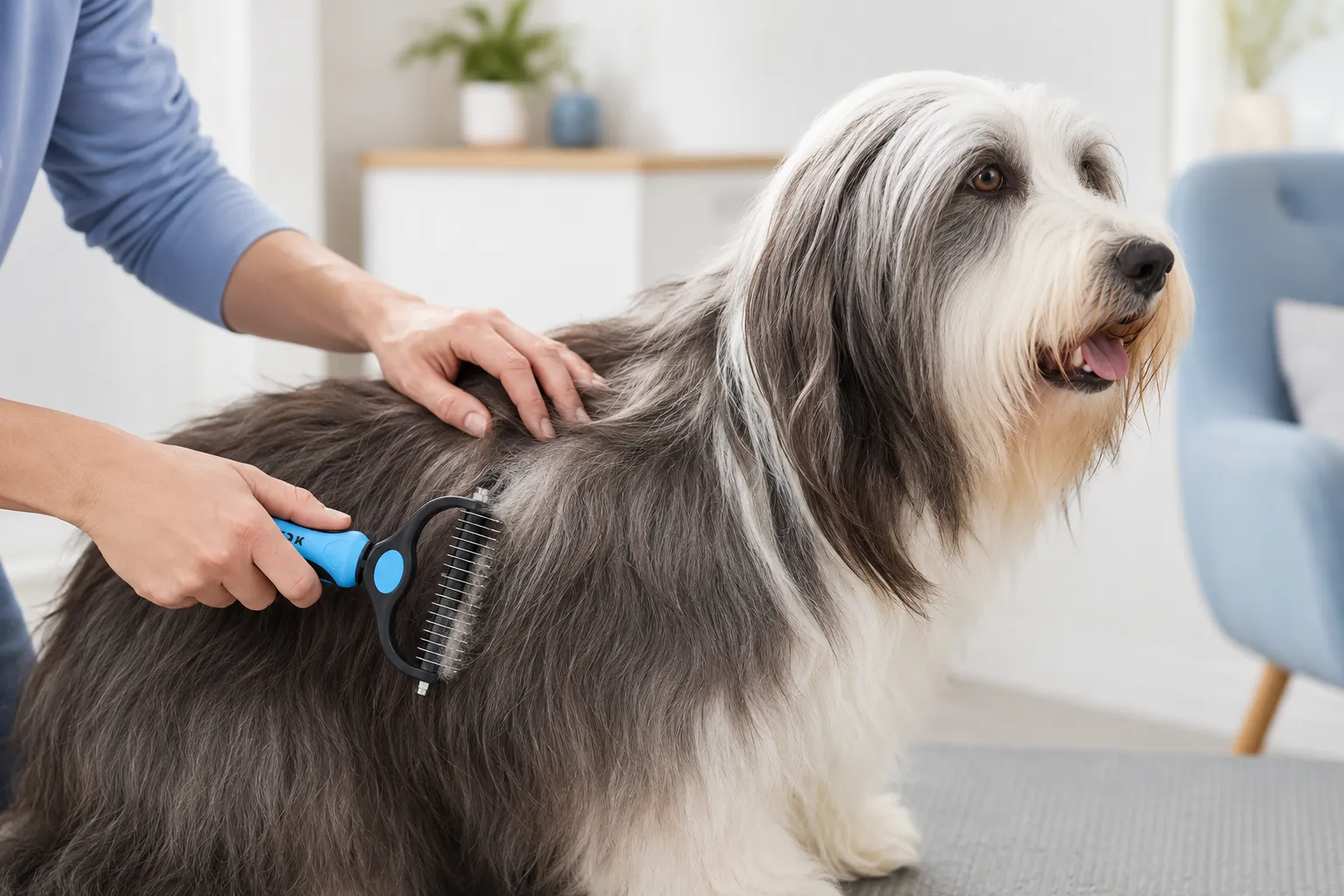
An undercoat rake is most relevant when loose undercoat is present, the section is tangle-free, and tooth depth suits the coat. A slicker is better for routine surface work and some small knots, while a metal comb checks for hidden resistance before and after raking.
A Simple Condition-Based Grooming Approach
A beginner-friendly approach should be condition-based rather than calendar-based.
- Inspect the skin and coat with your hands.
- Use a coat-appropriate brush or the wider section of a metal comb to check for tangles.
- Address only manageable tangles before considering an undercoat rake.
- Use the rake only when loose undercoat is present and the coat is tangle-free.
- Recheck the section with the comb.
- Stop before one area becomes overworked.
Do not continue simply because hair still appears on the tool. No confirmed percentage or volume defines the right amount to remove.
A practical stopping point is when collection slows, the comb passes more freely, the coat remains even, and the dog stays comfortable. This is a useful clue, not a validated threshold.
Stop immediately for repeated snagging, redness, sensitivity, pain, uneven thinning, or a dog that flinches, pulls away, freezes, growls, or tries to leave.
Packed, widespread, or skin-level matting needs professional assessment. Do not use scissors near a mat or treat routine shaving as a shedding solution.
Wet or dry use depends on the exact tool. Because the listing does not confirm wet use, the conservative position is a fully dry, detangled coat unless updated instructions say otherwise.
Where Docrok Fits—and Its Limits
The Docrok grooming brush and metal comb combo includes a dual-sided rake and a two-sided metal comb. According to the Amazon seller, the wider side is for mats and tangles, the denser side is for deshedding, and the comb supports more controlled coat work. Project photographs confirm the 9-tooth and 17-tooth configuration.
The 17-tooth side may suit loose undercoat in a tangle-free section. The 9-tooth side should be limited to a manageable tangle where the skin can be checked. The comb can locate resistance before raking and check the section afterward.
The set does not replace every brush or professional service, and no independent evidence confirms that it removes only detached hair or cannot affect the outer coat.
Final Takeaway
A double coat has a softer undercoat and a coarser guard-hair layer. Remove loose hair while preserving an even coat, match each tool to coat depth, and stop for resistance, redness, thinning, pain, or discomfort.
As an Amazon Associate I earn from qualifying purchases.
Sources
- VCA Animal Hospitals — Grooming and Coat Care for Your Dog
- American Kennel Club — What Is a Double Coat, and What Dog Breeds Are Double-Coated?
- American Kennel Club — How to Choose the Right Dog Brushes
- American Kennel Club — Dog Shedding: What to Expect and How to Manage It
- Blue Cross — How to Groom a Dog
- Amazon — Docrok Pet Grooming Combo