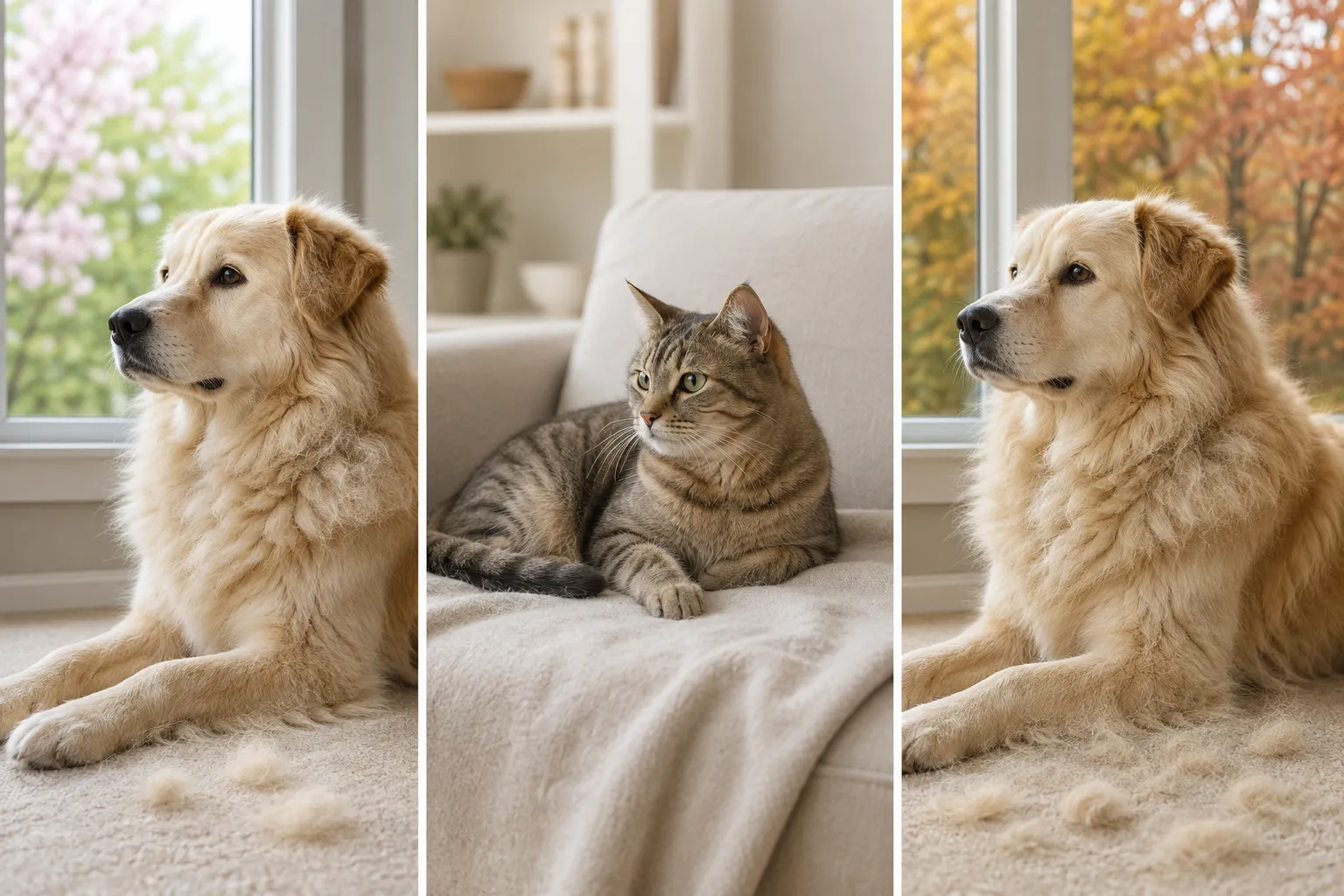
Many dogs and cats shed more heavily during spring and fall, but there is no universal calendar. Timing depends on daylight, temperature, coat type, climate, indoor living, and the individual pet.
Quick Answer: Many dogs and cats with seasonal coat cycles shed more heavily as daylight and temperature change, often during spring and fall. In spring, a heavier cold-weather coat may release; in fall, lighter warm-weather hair may be replaced as a denser coat develops. The timing is not identical for every pet. Indoor heating, air conditioning, and artificial lighting create a more stable environment, so some pets shed lightly throughout the year. Regular brushing or combing can collect loose hair, and an undercoat rake may help a suitable double coat during a heavy shed, but no grooming tool stops the natural hair-growth cycle.
Shedding season follows environmental and coat cues, not one universal date on the calendar.
What Triggers Seasonal Shedding?
Seasonal shedding is influenced by daylight and temperature. As day length changes, the coat receives cues that can shift hair toward a different stage of growth and release, but neither factor acts alone.
Other factors include:
- coat type and undercoat density;
- climate and latitude;
- indoor or outdoor living;
- genetics and individual hair-growth cycles;
- age, health, and stress.
Seasonal shedding often develops gradually rather than beginning on one exact date.
Spring and Fall Coat Changes
Spring and fall are common periods of heavier shedding, not fixed months.
Spring
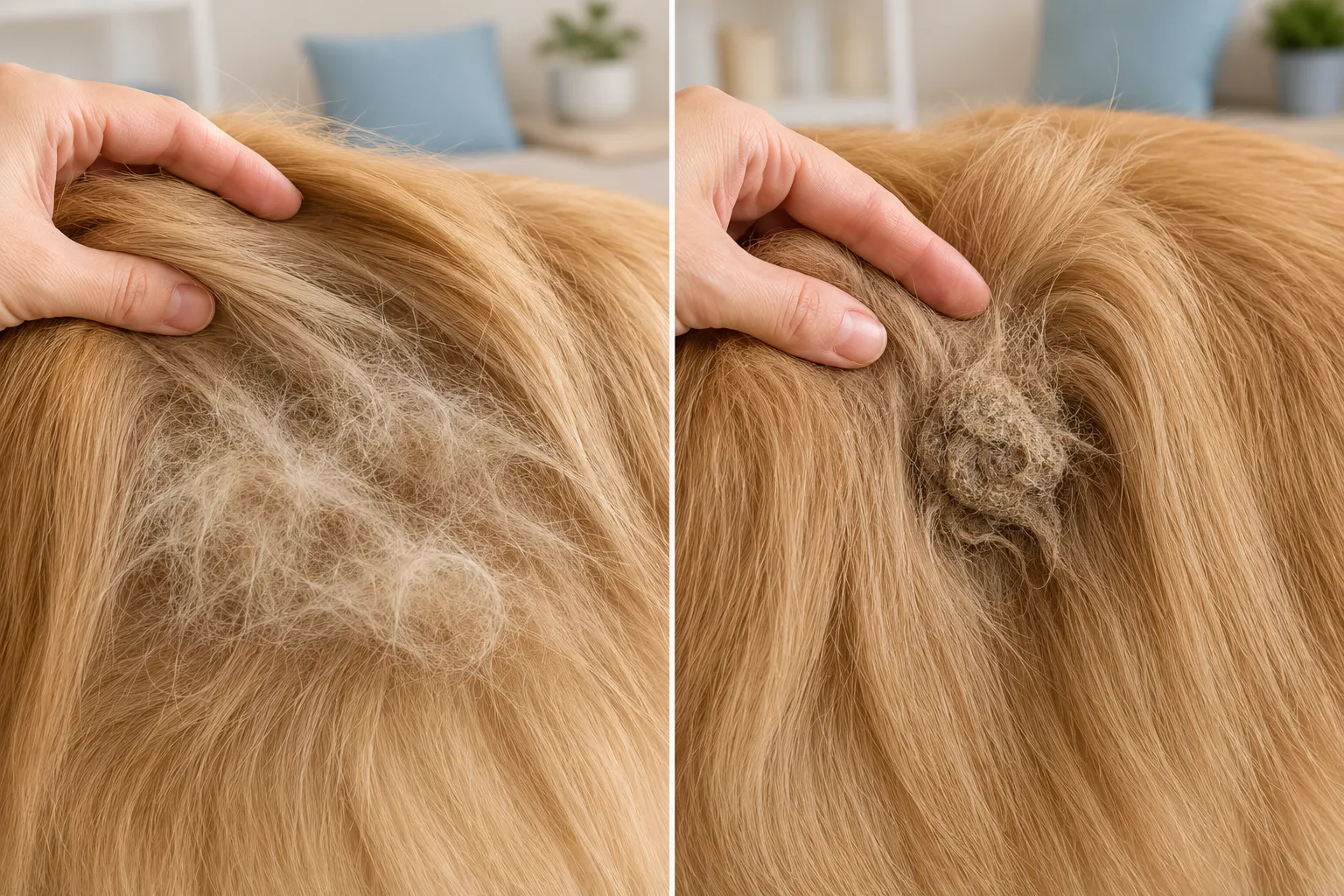
During spring, many seasonally shedding pets release part of a heavier cold-weather coat. Owners may notice soft tufts, loose undercoat, or more hair around the home.
Timing may be earlier in warm regions, later in colder climates, or less distinct indoors.
Fall
Fall shedding can happen while a denser cold-weather coat develops. The pet is not necessarily “losing the winter coat.” Lighter warm-weather hair may release as the seasonal coat changes.
A dense double coat may produce obvious clumps, while a short or sparse coat may show a smaller increase.
Why Indoor Dogs and Cats May Shed Year-Round
Indoor heating, air conditioning, and artificial lighting make the home environment more stable. That may reduce the contrast between seasons and contribute to low-level shedding throughout the year.
Indoor pets may still have seasonal peaks. Artificial lighting and a stable climate are possible contributors, not direct causes of abnormal shedding.
Year-round loose hair is therefore not automatically a problem. The coat and skin condition matter more than the season alone.
Why Timing and Amount Vary Between Pets
Coat structure strongly affects shedding.
Dogs with dense double coats may release a large amount of soft undercoat during seasonal transitions. Some short-haired dogs shed smaller amounts more consistently, while continuously growing coats may follow a different pattern.
Cats also vary. Many have guard hairs and a fine undercoat, but undercoat density differs. Outdoor cats in cooler climates may show stronger seasonal changes, while indoor cats often shed more evenly across the year.
Other differences include coat length and texture, single versus double coat, indoor or outdoor living, local climate, and individual grooming habits.
Two pets in the same household can still shed at different times and in different amounts.
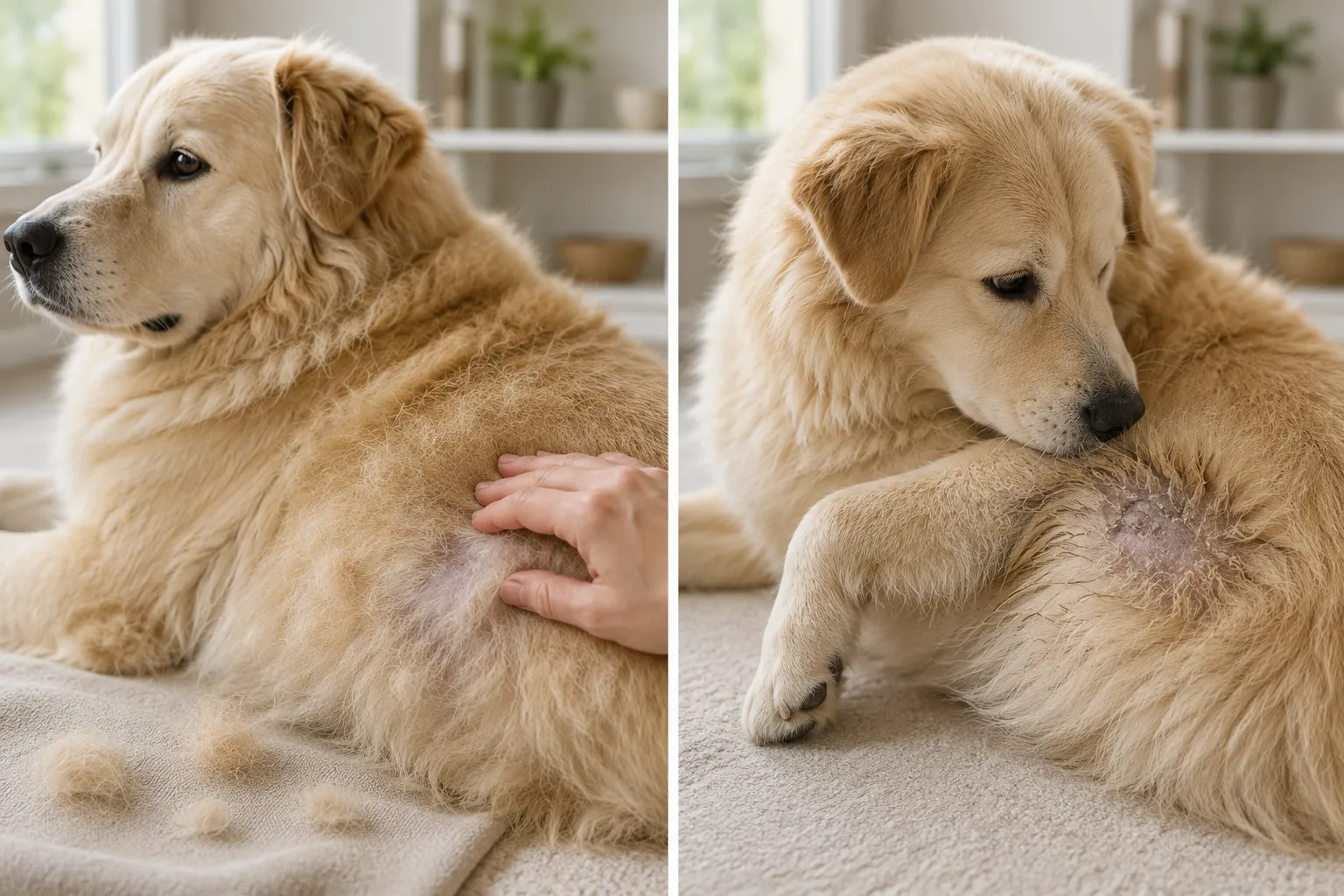
Normal Seasonal Shedding vs. Veterinary Warning Signs
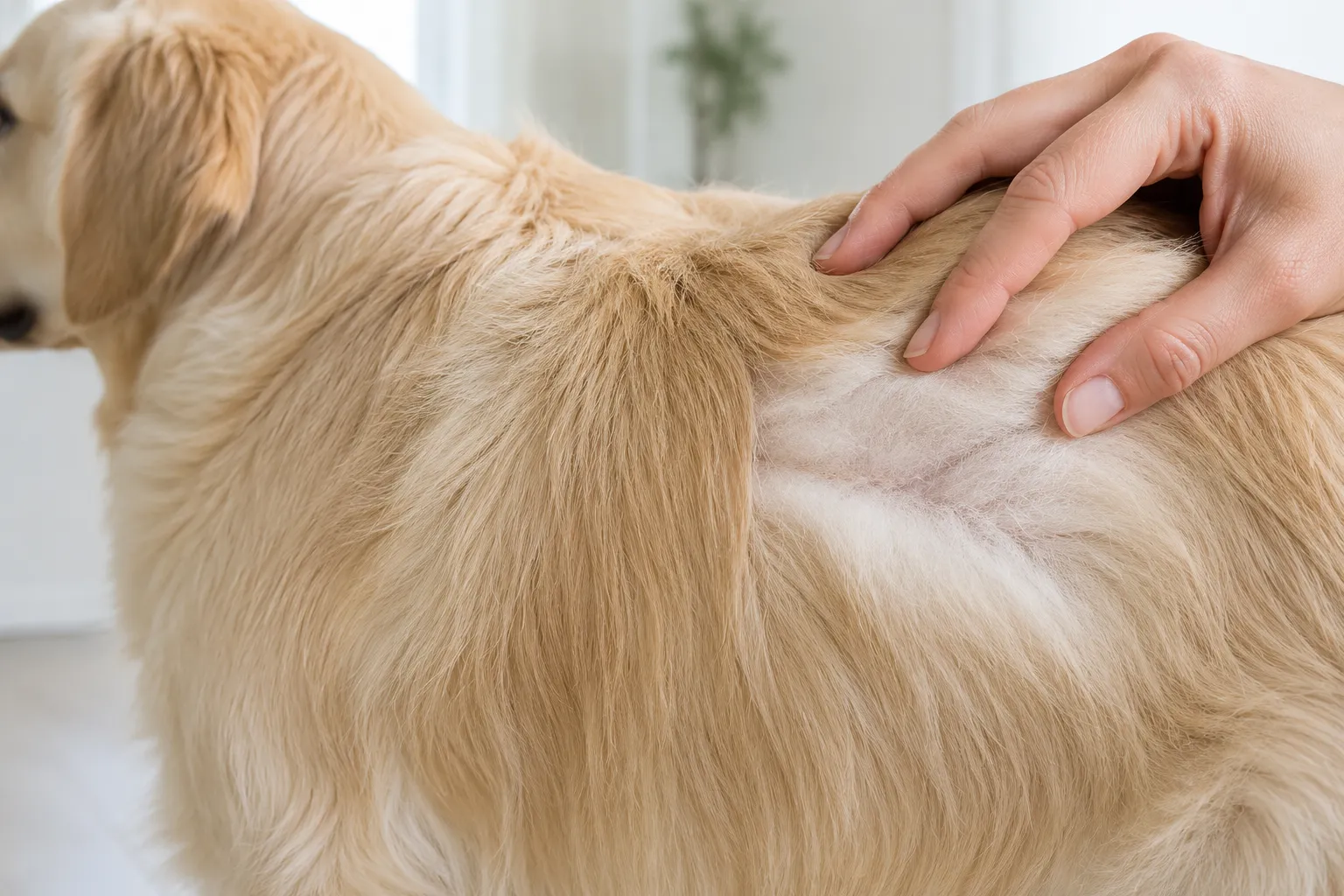
Seasonal shedding is more likely when loose hair is distributed across the coat, the skin looks normal, and the change develops gradually before tapering.
A normal seasonal release may include more household hair, soft undercoat coming away in tufts, an even-looking coat, and normal skin.
Seasonal timing does not make every coat change normal.
Contact a veterinarian when shedding is:
- sudden or very different from the pet’s usual pattern;
- patchy or associated with bald areas;
- accompanied by redness, itching, lesions, or raw skin;
- linked with a greasy coat, unusual odor, or heavy dandruff;
- happening with a noticeable change in self-grooming, weight, or behavior.
These signs should not be diagnosed through grooming alone.
Safe Grooming During a Heavy Shed
A heavy shed may justify more coat checks and ordinary brushing or combing, but not automatic daily rake use.
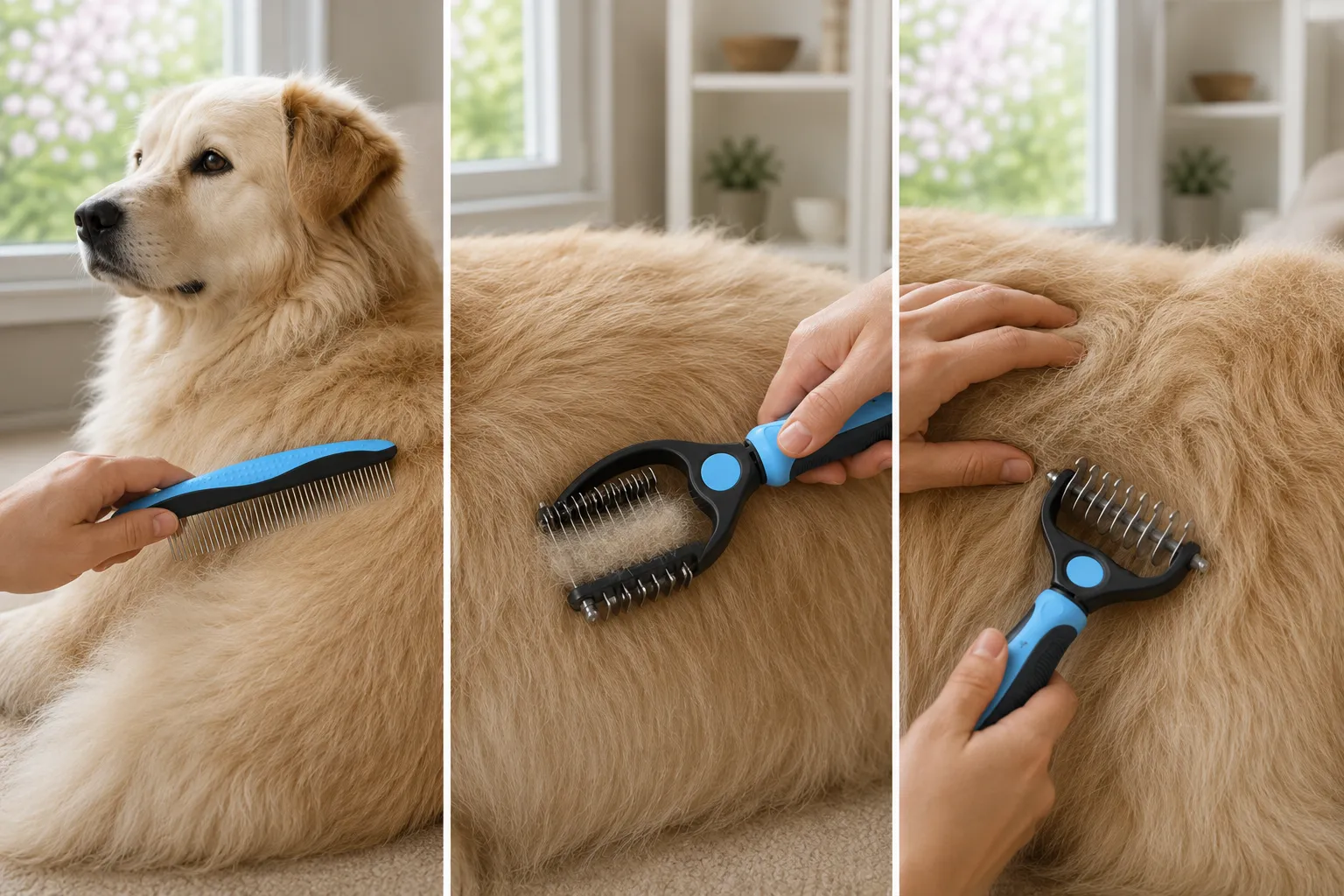
Start by checking the skin, tangles, mats, and coat depth. Match the tool to the coat:
- bristle, rubber, or mitt-style tools may suit many smooth short coats;
- slickers, pin brushes, or metal combs may suit longer or denser coats;
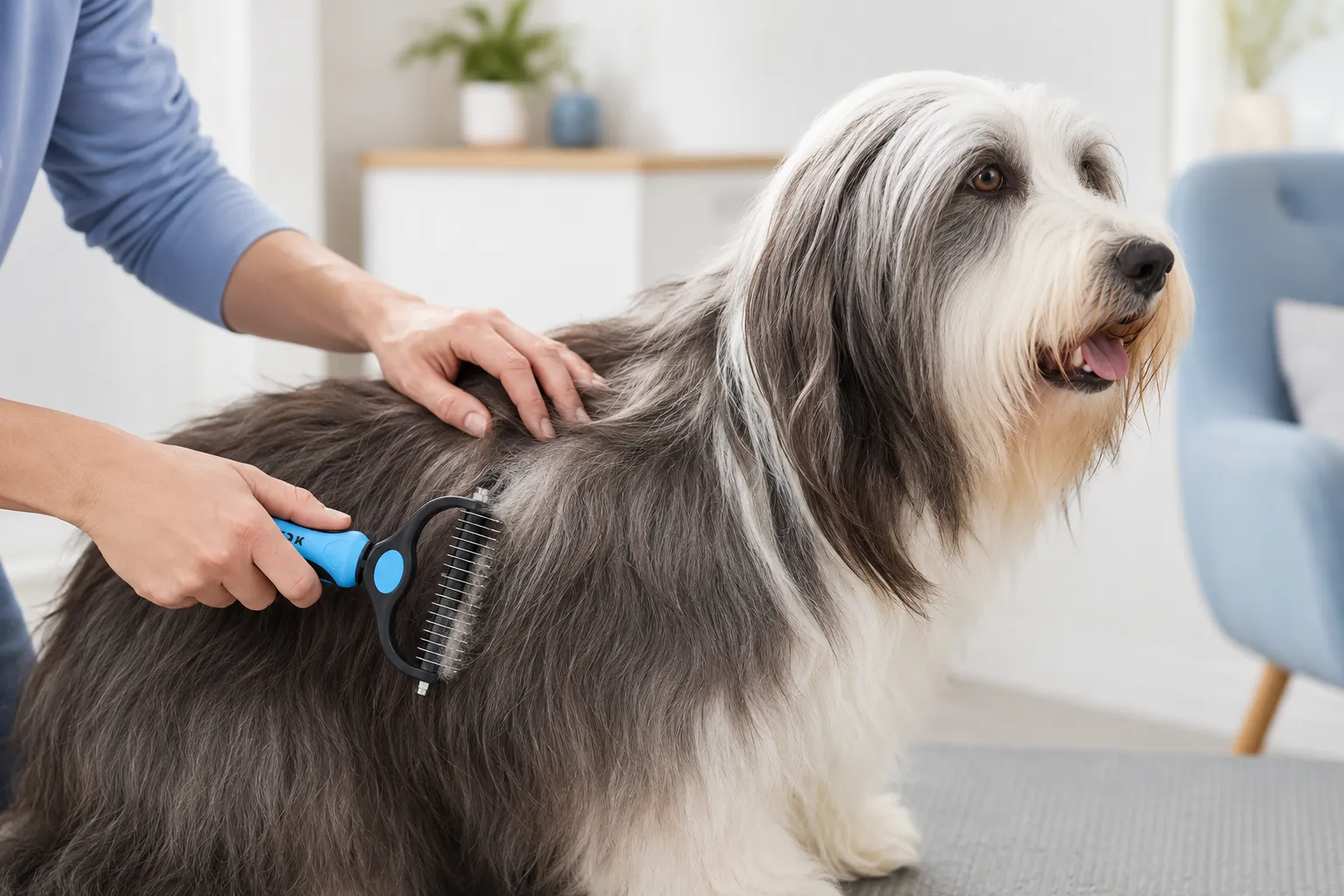
- an undercoat rake should be limited to a suitable coat with loose undercoat and no tangles.
According to the Amazon seller, the dense 17-tooth side of the Docrok rake is intended for deshedding. Use it only when loose undercoat is present in a suitable, tangle-free section. The 9-tooth side is for manageable tangles, not as the main seasonal shedding surface.
The metal comb can check for hidden resistance before and after raking. Stop for snagging, redness, thinning, pain, or pulling away. A deshedding tool manages loose hair already in the coat; it cannot stop the natural cycle.
You can view the Docrok grooming brush and metal comb combo to see the separate rake and comb functions.
Final Takeaway
Spring and fall are common shedding periods for dogs and cats, but there is no universal month or schedule. Indoor pets may shed lightly all year while still having seasonal peaks.
Judge the change by coat type, skin condition, and the pet’s usual pattern. Increase ordinary grooming carefully, use a rake only when the coat truly suits it, and contact a veterinarian for sudden, patchy, itchy, greasy, painful, or odorous coat changes.
As an Amazon Associate I earn from qualifying purchases.
Sources
- VCA Animal Hospitals — The Importance of Your Pet’s Skin and Coat and the Role of Nutrition
- VCA Animal Hospitals — Grooming and Coat Care for Your Dog
- VCA Animal Hospitals — Grooming and Coat Care for Your Cat
- VCA Animal Hospitals — Coat and Skin Appearance in the Healthy Dog
- VCA Animal Hospitals — Coat and Skin Appearance in the Healthy Cat
- American Kennel Club — Dog Shedding: What to Expect and How to Manage It
- PetMD — Why Is My Dog Shedding So Much?
- Amazon — Docrok Pet Grooming Combo