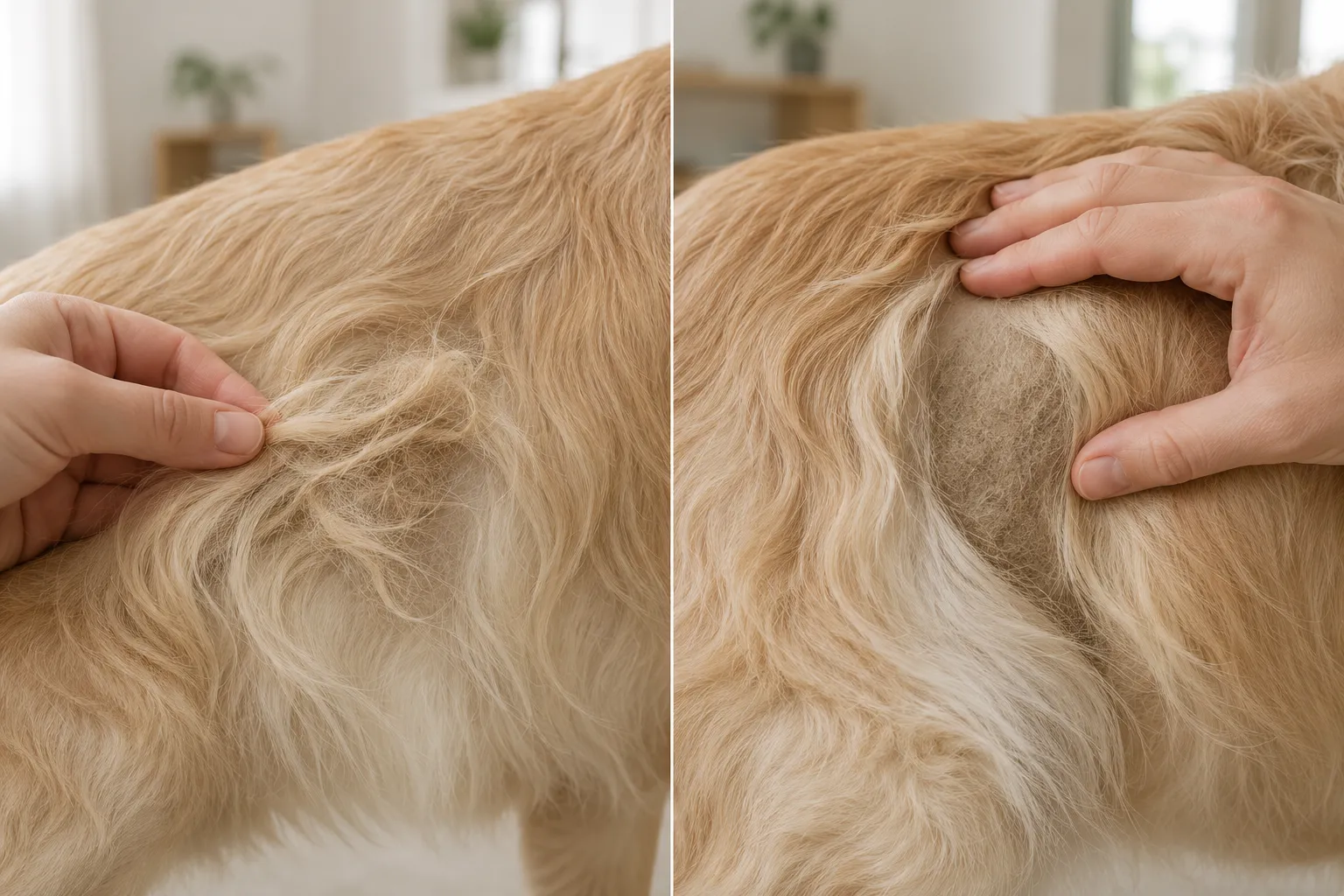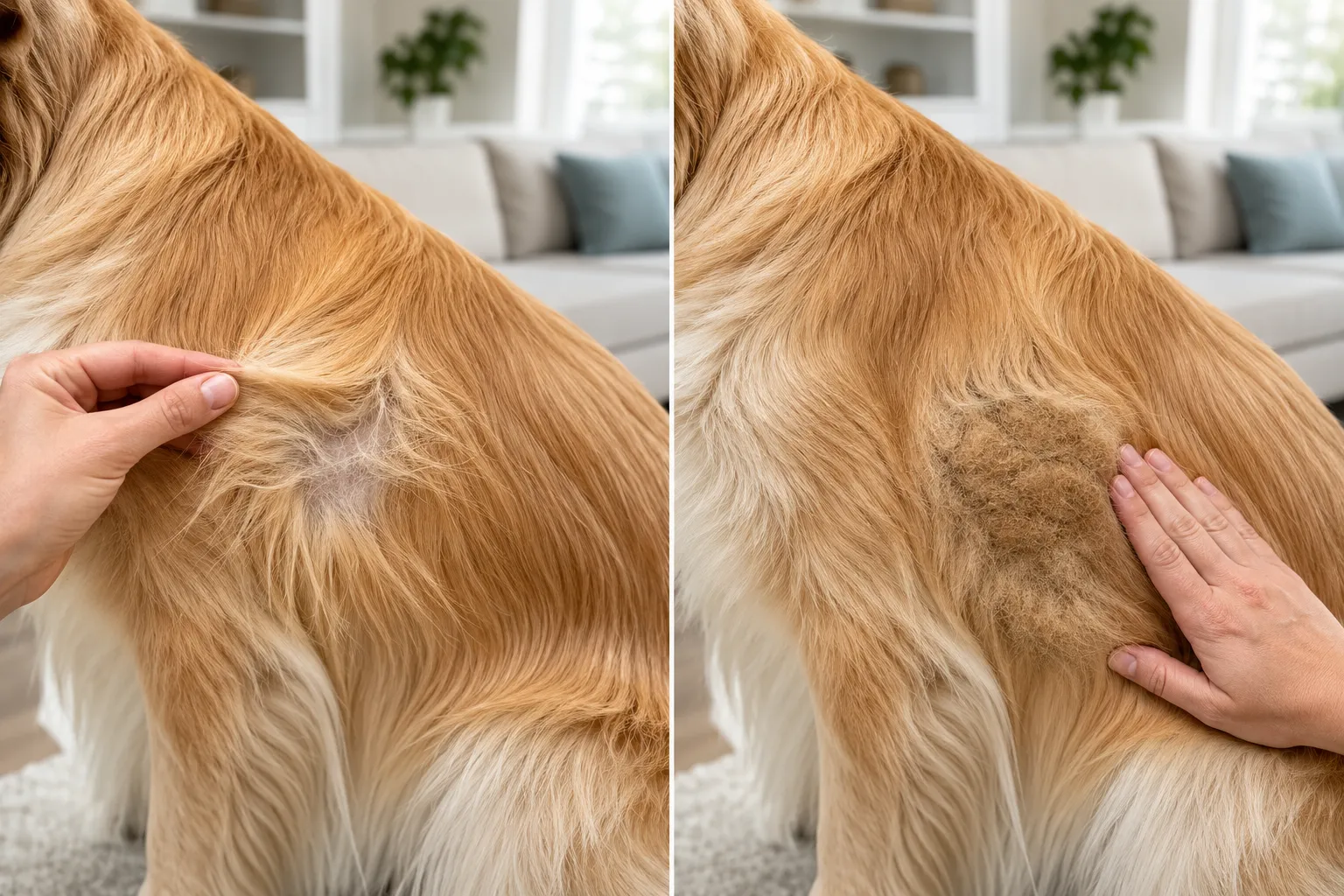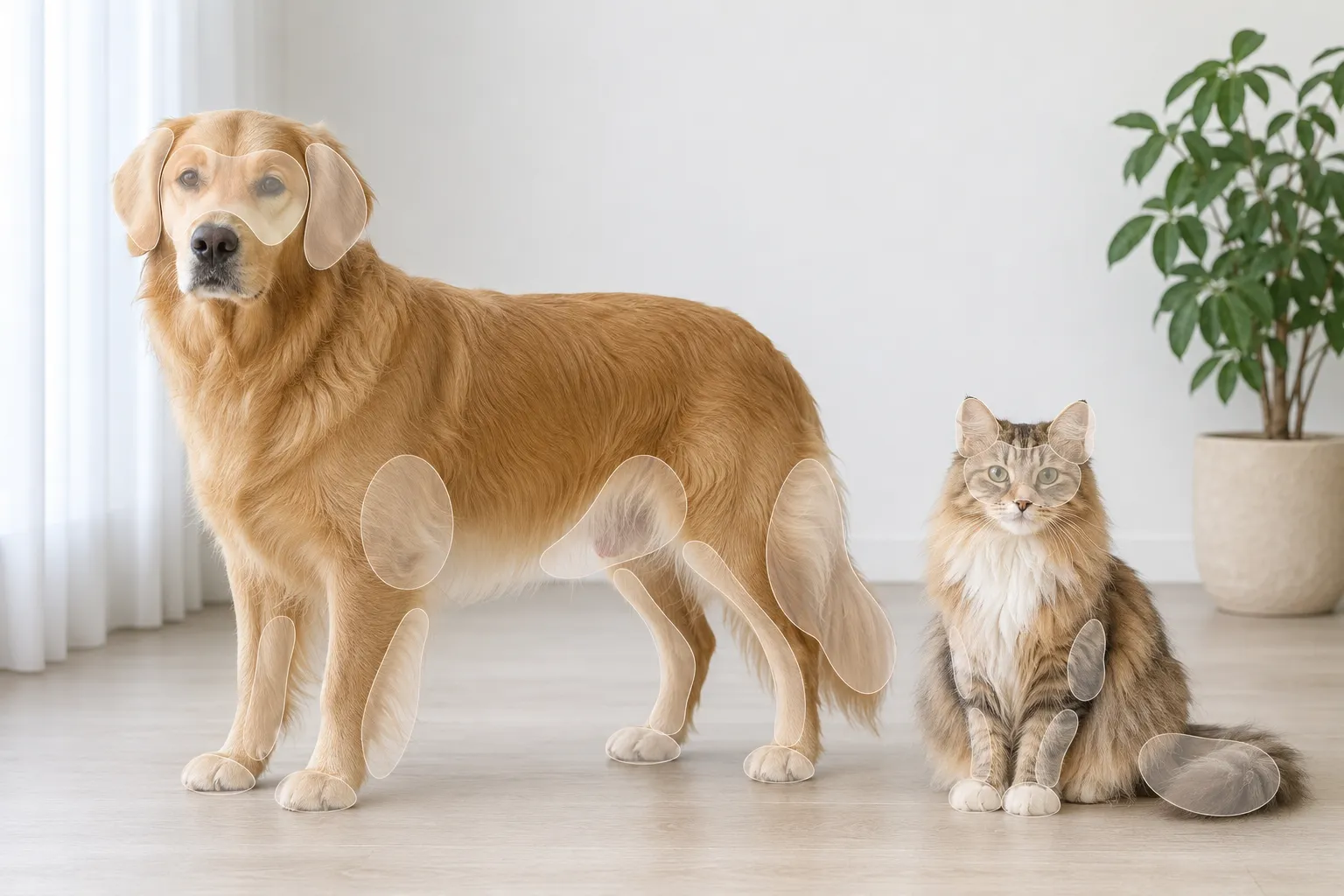
A dematting rake is not a whole-body brush. Limit it to broad, well-coated sections where the tool path is visible, the skin looks normal, and the tangle is manageable. Common matting locations are often inspection areas rather than suitable rake areas.
Quick Answer: Do not use a dematting rake on the face, around the eyes, on the ears, paws, between the toes, armpits, belly, groin, genital area, thinly coated or bony areas, abnormal skin, or a tight mat close to the skin. Stop if the tool repeatedly catches or the pet shows discomfort. A metal comb may offer more control for checking some areas, but it should also stop at resistance. Severe, painful, widespread, or skin-level mats need professional assessment.
This body-area list is a conservative DocRokBrush.com use boundary. No single reviewed source publishes the same universal blacklist for every rake design.
Why Body Area and Coat Depth Matter
A rake needs enough coat depth to separate its teeth from the skin and enough room for a visible tool path. Thin or folded skin, little coat cushioning, nearby sensitive anatomy, and sudden movement all reduce control.
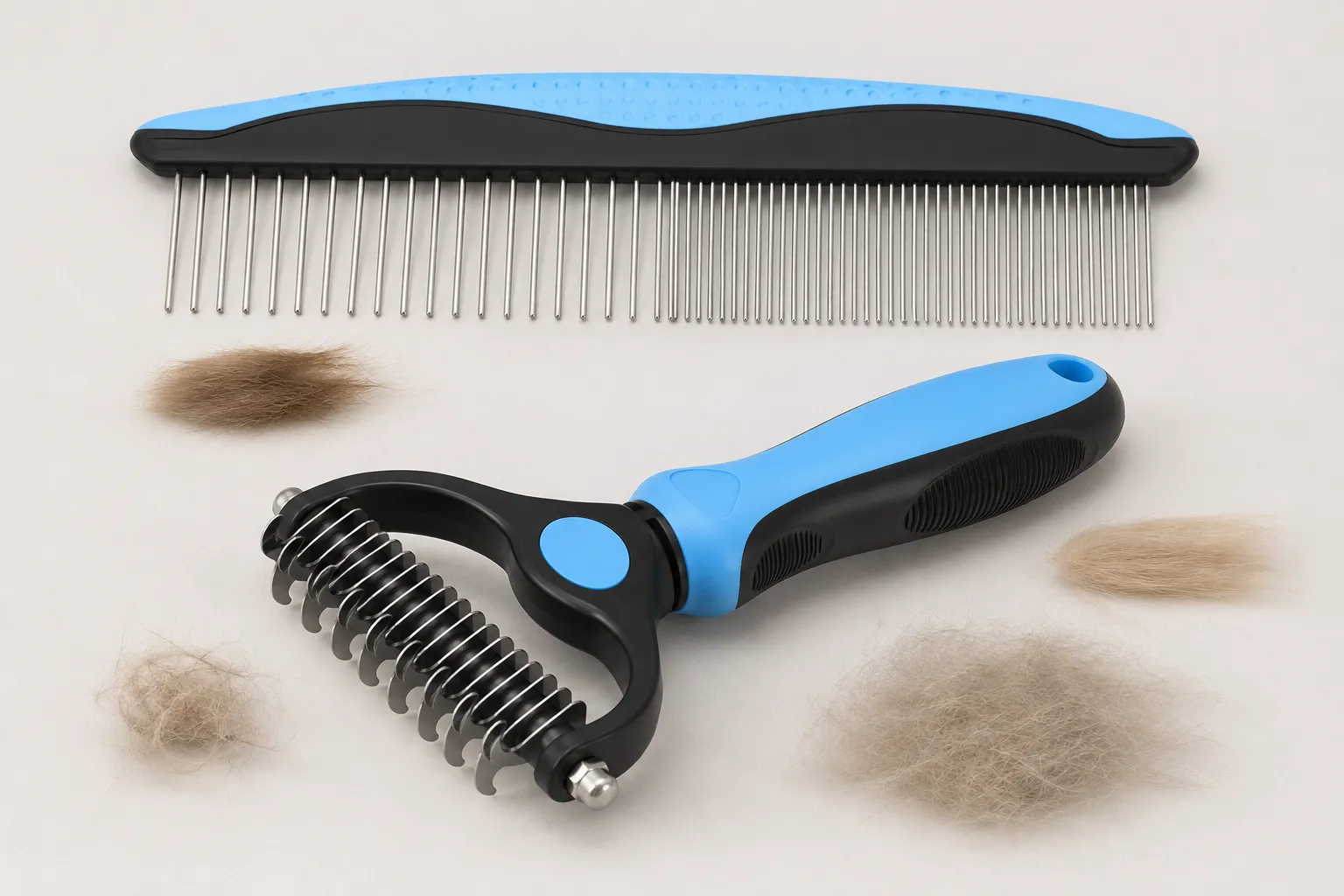
Long hair does not make every area suitable. The 9-tooth side is for manageable tangles, while the 17-tooth side is for loose undercoat—not mats.
Head, Ears, Paws, and Other Small Areas
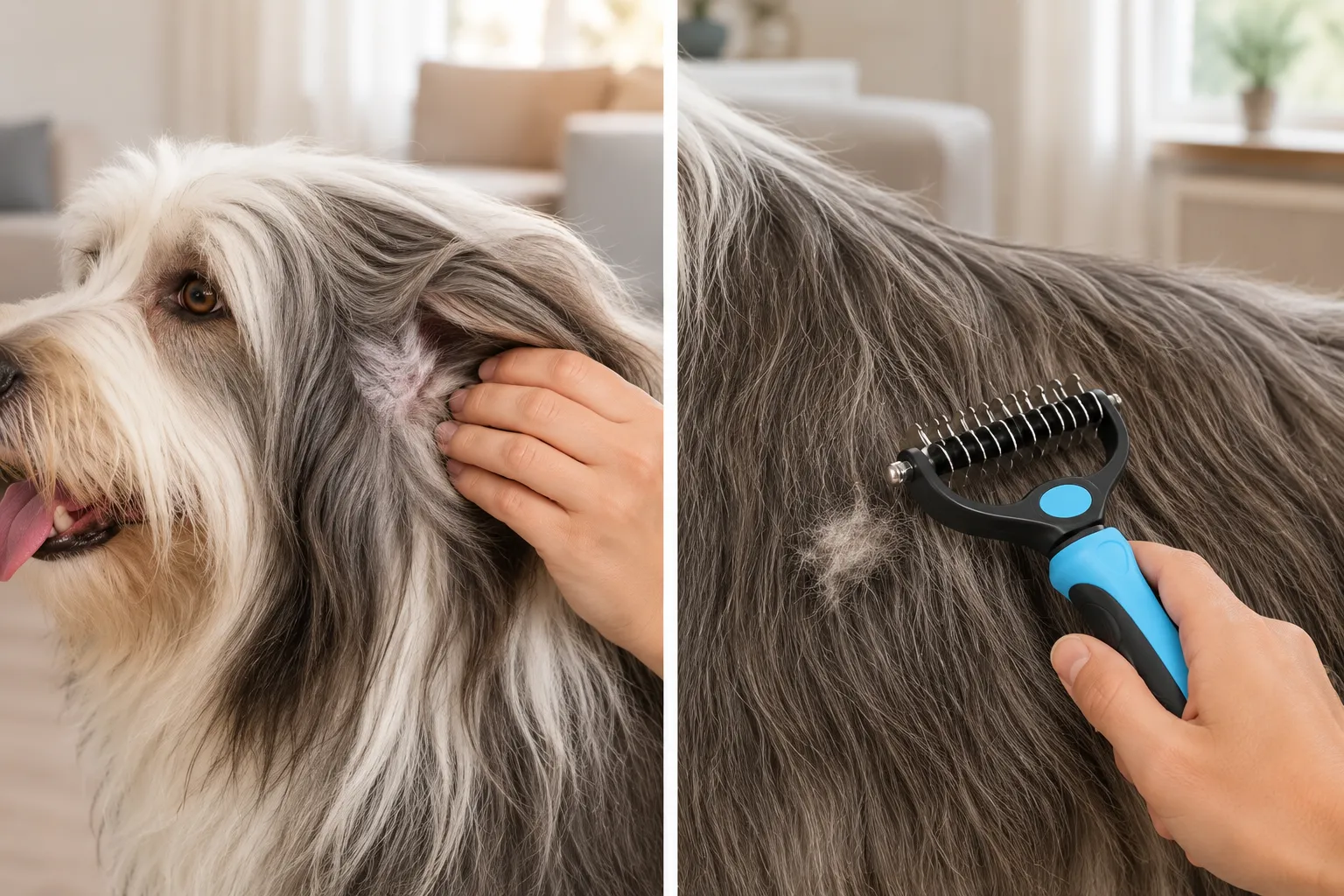
Do not use a dematting rake on the face, muzzle, cheeks, eye area, whisker pads, ear flaps, ear edges, paws, between the toes, or near the pads. These areas are small, mobile, thin-skinned, and difficult to control with a wide metal tool.
Behind the ears is a common tangle location, but that does not make it a routine rake area. Inspect with your fingers and use a wide-tooth comb only where it moves freely. Tight facial, ear, or paw mats belong with a professional groomer.
Armpits, Belly, Groin, and Genital Area
Treat the armpits, belly, groin, inner upper legs, and genital area as inspection zones rather than rake zones. Thin or mobile skin, folds, friction, and leg movement reduce control. Check with your hands and use a comb only where it passes without force. Dense or skin-level matting in these areas needs professional handling.
Thinly Coated, Bony, Tail, or Abnormal Skin Areas
Avoid thinly coated or bony sections such as elbows, knees, hocks, hip points, lower legs, and the tail. Reduced coat cushioning makes skin contact and loss of control more likely.
Never use the rake over:
- redness or inflammation;
- wounds, scratches, or scabs;
- bleeding or damp skin;
- discharge or unusual odor;
- painful areas;
- bald or thinning patches;
- unexplained lumps or skin changes.
Stop and contact a veterinarian when skin appears abnormal or painful.
Tight Mats and Distressed Pets
Do not use the rake on a dense skin-level mat. Stop when the skin cannot be checked, the mat and skin move together, the tool repeatedly catches, the mat is widespread, or the pet shows fear, pain, or escape behavior.
Do not pull harder, saw through the coat, use scissors, bathe the mat first, or restrain the pet. Tight, painful, widespread, or pelted matting needs professional assessment.
When the Comb or Professional Help Is Better
The included metal comb may offer more control for inspection, but it is not risk-free. Start with the wider section and stop if it catches. Do not press it into the skin or pull it through a tight mat.
Choose a groomer for skin-level, widespread, difficult, or repeatedly unsuccessful home cases. Contact a veterinarian for pain, wounds, bleeding, dampness, discharge, unusual odor, abnormal skin, or possible sedation needs.
You can view the Docrok grooming brush and metal comb combo to see the separate roles of the rake and comb.
Final Takeaway
Keep a dematting rake away from sensitive, thinly coated, bony, abnormal-skin, and skin-level-mat areas. Use it only on broad, visible, well-coated sections with a manageable tangle, and stop for repeated catching or distress.
As an Amazon Associate I earn from qualifying purchases.
Sources
- VCA Animal Hospitals — Grooming and Coat Care for Your Dog
- VCA Animal Hospitals — Grooming and Coat Care for Your Cat
- VCA Animal Hospitals — How to Groom a Long-Haired Cat
- PetMD — Pet Grooming: How to Handle Matting in Dogs and Cats
- RSPCA — How and Why to Groom Your Cat
- American Kennel Club — How to Choose the Right Dog Brushes
- American Kennel Club — National Core Professional Dog Grooming Educational Standards
- Amazon — Docrok Pet Grooming Combo